AI for Rosacea: Expert Strategies to Calm Chronic Redness
Read about AI for Rosacea: Expert Strategies to Calm Chronic Redness on Cosmi Skin
If you live with rosacea, you know the script by heart: the sudden, unwelcome flush, the frustrating search for elusive triggers, and the disheartening cycle of treatments that promise relief but often fall short on precision. For years, managing this chronic condition has felt like navigating a dense fog, relying heavily on subjective assessments that shift with every new flare. But what if we told you the landscape of dermatological care is now undergoing a profound, data-driven revolution?
Artificial intelligence isn't here to replace the invaluable expertise of your dermatologist. Instead, it
’s stepping in to amplify it, bringing unprecedented clarity and objectivity to the complex world of chronic redness. This transformation is more than just exciting; it's essential. When dealing with a condition characterized by subtle yet persistent inflammation, guesswork simply isn't good enough. We need advanced tools that can "see" what the naked eye might miss, guiding us toward truly effective solutions.
In this expert guide, AI for Rosacea: Expert Strategies to Calm Chronic Redness, we pull back the curtain on how cutting-edge technology is forging personalized pathways to calmer, more predictable skin. You
’ll discover how advanced AI tools are achieving remarkable accuracy in diagnosing rosacea, moving beyond guesswork to provide hard, undeniable data. We'll explore how these smart platforms precisely profile severity and meticulously monitor your treatment response over time, ensuring every adjustment is an informed, strategic one.
Furthermore, we
’ll dive into how this technology empowers you, the patient
—even visualizing potential treatment outcomes to better manage expectations and boost your confidence. Finally, we'll ground these exciting digital advancements by examining the enduring role of proven clinical workhorses like Intense Pulsed Light (IPL) therapy. Get ready to explore the sophisticated, technology-backed strategies that are defining the future of effective rosacea management, helping you reclaim control over your skin.
The Persistent Problem of Rosacea: Why Precision Matters for Your Skin
Rosacea is far more than just a "blush." This prevalent and often misunderstood chronic inflammatory skin condition manifests as persistent facial redness, visible blood vessels (telangiectasias), and sometimes inflammatory lesions like papules and pustules. For millions worldwide, this isn't merely a cosmetic concern; it's a deeply impactful health challenge that touches self-esteem and quality of life.
Left unaddressed, rosacea can progress, leading to significant skin complications and even ocular issues. The traditional journey to managing rosacea has often been fraught with difficulty. Diagnosis typically relies heavily on physical examination
—a method notoriously prone to considerable subjectivity and variability among dermatologists. This inconsistency can unfortunately lead to delayed or imprecise diagnoses, hindering effective management right from the start.
This is precisely why early, accurate diagnosis, coupled with highly targeted treatment, is paramount. It
’s the absolute key to preventing the condition from worsening and dramatically improving patient outcomes. In this challenging landscape, Artificial Intelligence (AI) emerges as a powerful game-changer. AI presents a much-needed paradigm shift, offering innovative solutions to overcome the inherent limitations of traditional rosacea assessment and management, paving the way for a future of calmer, clearer skin for you.
Beyond the Naked Eye: How AI is Redefining Rosacea Diagnosis

Your journey to calm chronic redness truly begins with an accurate diagnosis. For many, traditional methods can feel subjective and frustratingly inconsistent. But what if we told you that artificial intelligence is now stepping in to offer a more objective, more precise way to identify rosacea? This innovative leap, powered by sophisticated deep learning algorithms, is transforming how we understand and approach this incredibly common skin condition.
AI-powered diagnostic tools are already demonstrating remarkable capabilities. Take Ros-NET, for instance
—an advanced system that has shown impressive accuracy, identifying rosacea with an 88-90% success rate. This is a monumental advancement, especially when you consider its consistency compared to traditional physical examinations, which are often susceptible to high variability among different practitioners. This means AI is delivering more consistent, reliable diagnoses
—a crucial first step toward truly effective management for your unique skin. To discover how AI can transform your personal skincare journey, visit Cosmi Skin.
So, how does this smart technology work its magic? Unlike the human eye, which can be influenced by varying lighting conditions or individual interpretations, AI utilizes sophisticated image analysis. It's meticulously trained to examine digital images captured in natural white light, leveraging subtle facial features and lighting patterns to pinpoint affected areas. This meticulous approach allows the AI to locate and highlight areas of concern with unparalleled precision, catching details you might never notice.
To achieve such high levels of detection, these initial AI algorithms underwent extensive, rigorous training. Researchers fed them an enormous dataset of over a million patient images, allowing the deep learning models to refine their detection capabilities and recognize the subtle nuances of rosacea. This vast learning experience enables the AI to "see" patterns that might be missed or misinterpreted by the naked eye, offering a level of scrutiny that simply wasn't possible before.
While these AI tools are incredibly effective at identifying the presence of rosacea, their capabilities are continually evolving. Current versions are still developing the ability to detail specific symptoms like papules, pustules, or telangiectasias (spider veins) with the same granularity as a seasoned dermatologist. However, the core objective remains crystal clear: to provide a consistent, data-driven foundation for diagnosis, ultimately empowering both patients and experts with clearer, more actionable insights into your skin's health. This technology promises to reduce diagnostic discrepancies, paving the way for more timely and tailored treatment strategies designed just for you.
The AI Advantage: Profiling Severity and Monitoring Your Treatment Responses

Beyond just initial identification, AI is revolutionizing how we understand and manage rosacea, moving far beyond a simple "yes or no" diagnosis. Traditional assessments often struggle with subjectivity and variability, making precise evaluation a long-standing challenge in both clinical practice and research. However, AI-driven systems offer a sophisticated solution by comprehensively profiling rosacea severity. They meticulously analyze morphological markers and clinical manifestations, providing a standardized, objective quantification of your condition.
This advanced capability allows for unparalleled monitoring of treatment responses over time. Imagine a tool that tracks subtle changes that might be missed by the human eye
—minute shifts in redness, precise lesion counts, and intricate vascular patterns. AI tools excel at this, offering objective insights that provide clear, data-driven indicators of treatment effectiveness. This empowers experts to understand what truly works for your individual skin, eliminating guesswork and maximizing results.
Crucially, monitoring your treatment responses with AI can help prevent disease progression, ensuring interventions are timely and profoundly effective. This proactive approach significantly enhances your quality of life by reducing frustrating flare-ups and dramatically improving overall skin health. The technology further supports personalized treatment adjustments, allowing your AI Cosmetologist (or dermatologist, guided by AI) to fine-tune routines and product recommendations based on real-time, objective data. This level of precision ensures every strategy is perfectly tailored, moving you closer to the calm, clear skin you deserve.
Empowering Patients: AI for Visualizing Progress and Managing Expectations
Living with a chronic skin condition like rosacea often involves a challenging journey of trial, error, and fluctuating hope. Understanding how treatments will impact your unique skin, and crucially, managing expectations around visible results, is paramount for maintaining motivation and adherence to your regimen. This is precisely where artificial intelligence is stepping in, empowering patients like you with unprecedented clarity and control over your skincare journey.
Innovative platforms such as Generative Skin leverage advanced AI to transform patient education and engagement. This cutting-edge tool allows individuals to simulate the effects of various skincare ingredients and treatments on their unique skin concerns, including the persistent redness and inflammation so characteristic of rosacea. Imagine being able to upload a photo of your skin and, with AI's guidance, realistically visualize how your redness and inflammation might reduce over 2, 4, or even 6 weeks with specific treatments.
Key benefits of AI visualization tools like Generative Skin include:
- Enhanced Understanding: You can see a simulated progression, truly understanding how active ingredients work on your skin, rather than relying solely on abstract explanations. This makes the science tangible.
- Realistic Expectation Management: AI simulations provide realistic timelines for visible results. This helps manage the common frustration of slow progress and prevents premature abandonment of regimens that are, in fact, working.
- Improved Treatment Adherence: By clearly demonstrating gradual, yet tangible, progress, these visual tools significantly reduce the emotional burden associated with chronic conditions. When you can see your skin getting better, even incrementally, you are far more likely to stick to your prescribed routine and feel empowered.
- Bridging the Knowledge Gap: Ultimately, AI in this context acts as a powerful bridge, translating complex clinical science into practical, easy-to-understand visual information. This makes self-management more informed and empowers you to partner more effectively with your dermatologist in achieving optimal, lasting skin health.
This visual clarity offers a new layer of support, helping you distinguish between temporary changes and actual, sustained improvements, fostering a more positive and proactive approach to managing your rosacea. It's about giving you the confidence that your efforts are truly paying off. For advanced personalized skincare insights and tools, consider Cosmi Skin's platform.
Current Clinical Arsenal: The Enduring Role of Intense Pulsed Light (IPL)
Before we fully immerse ourselves in the innovative world of AI for rosacea management, it's crucial to acknowledge and understand the established treatments that currently form the bedrock of dermatological care. Among these, Intense Pulsed Light (IPL) stands out as a widely recognized and incredibly effective non-invasive therapy for calming the chronic redness and visible blood vessels associated with rosacea. This technology has consistently proven its worth in addressing the core vascular symptoms that often define this challenging skin condition, offering relief to countless patients.
IPL therapy works by delivering broad-spectrum light pulses that are precisely calibrated to target specific chromophores (light-absorbing molecules) in the skin. For rosacea, the primary target is hemoglobin within the abnormally dilated blood vessels. This process, known as photothermolysis, selectively heats and safely destroys these unwanted vessels without significantly harming the surrounding healthy tissue. Beyond simply reducing visible capillaries (telangiectasia) and persistent facial redness (erythema), IPL also stimulates collagen remodeling. This contributes to improved skin texture and provides better support for the dermal connective tissue, which can often be disorganized in rosacea-affected skin, leading to a smoother, more even complexion.
Clinical studies consistently highlight IPL's significant benefits. Research indicates that patients can experience substantial reductions in redness, with some studies reporting improvements of up to 80%, alongside a notable decrease in flushing episodes
—a huge relief for many. Many also report an improved overall skin texture, contributing to a more even and calm complexion.
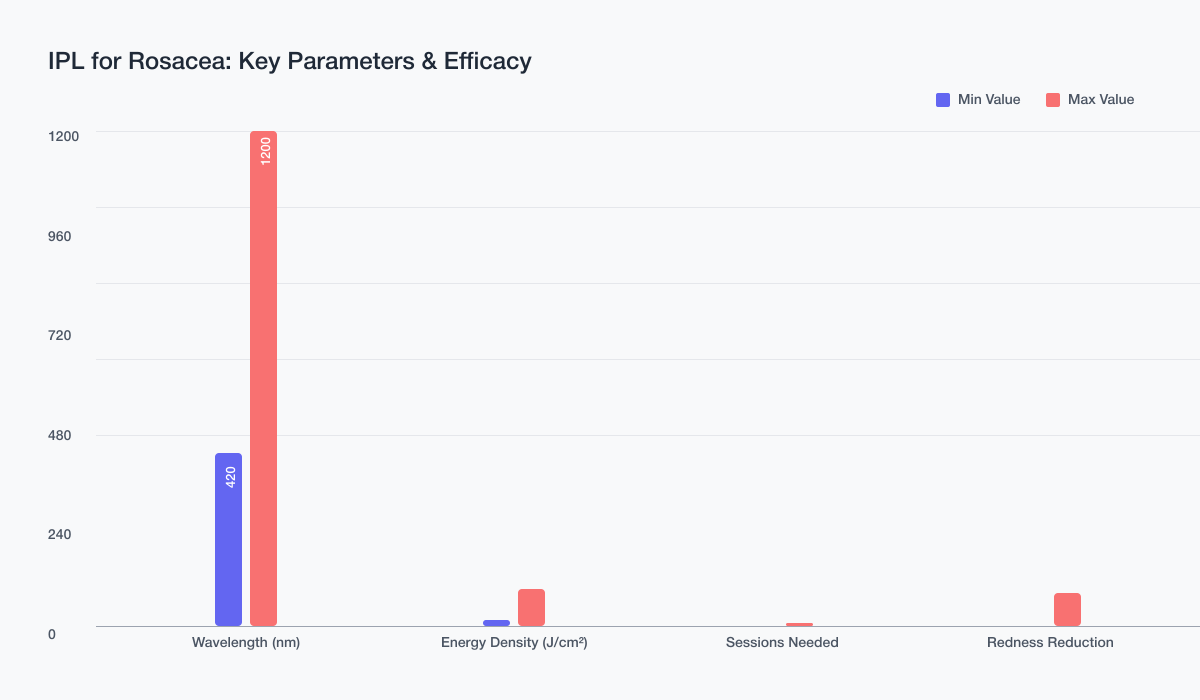
However, it's important to understand that IPL treatment protocols are not one-size-fits-all. Parameters such as the wavelength of light used (typically ranging from 420 nm to 1200 nm), the energy density applied (from 15 J/cm
² to 90 J/cm
²), and the total number of sessions required (which can vary from 1 to 7 or more) are often meticulously tailored to individual patient needs, skin type, and rosacea severity. This variability underscores the paramount importance of an expert assessment by a qualified dermatologist.
While generally safe and well-tolerated, common adverse effects are usually transient and mild. Patients might experience temporary sensations such as mild pain during the procedure, post-treatment edema (swelling), minimal bruising, or a fleeting burning sensation, all of which typically resolve within a few days.
Despite its demonstrated efficacy and widespread use, some studies acknowledge methodological limitations, emphasizing the ongoing need for more rigorous, standardized trials to further optimize IPL protocols and provide even more definitive guidance for practitioners and patients. Nevertheless, IPL remains an invaluable and trusted tool in the expert strategies for managing rosacea, a testament to its consistent results.
The Symbiotic Future: Integrating AI with Your Clinical Practice
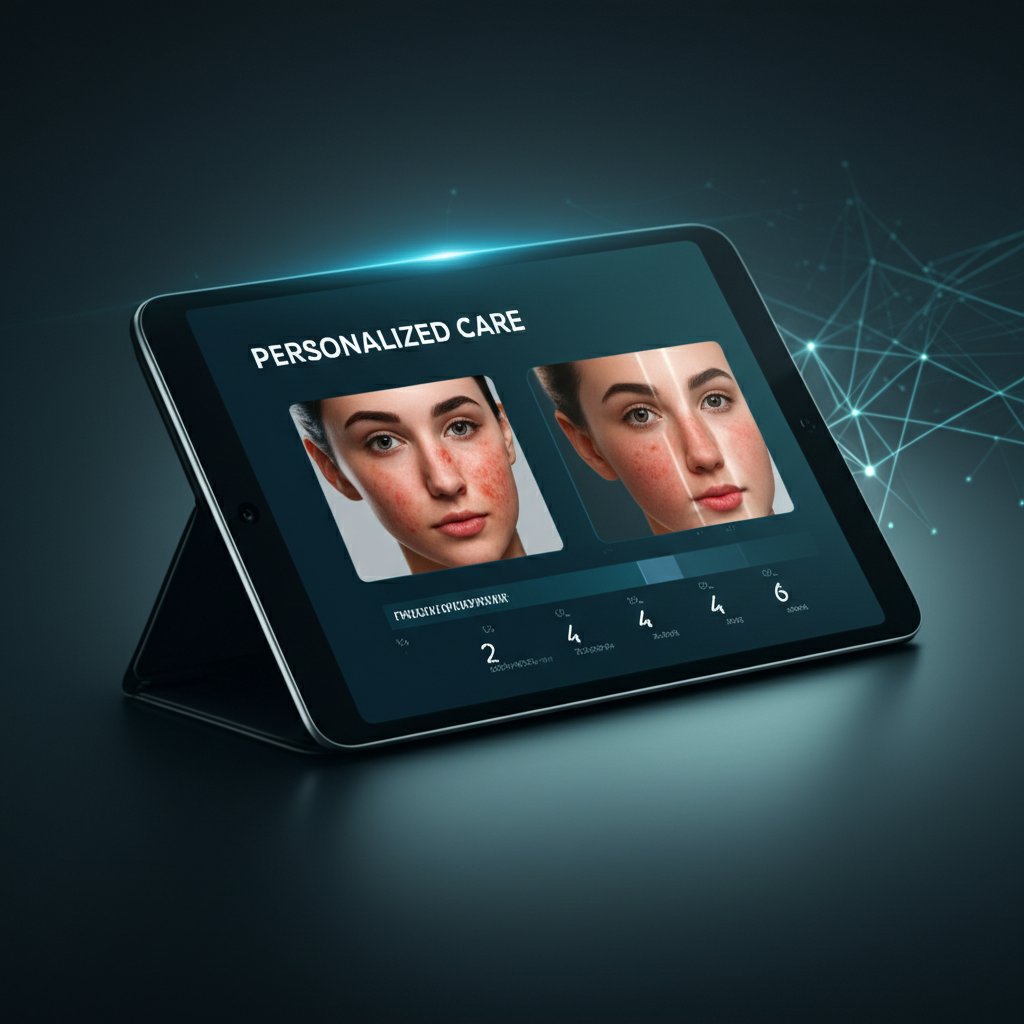
The journey to calm chronic rosacea redness is rapidly evolving, with advanced AI tools and established clinical treatments forming a powerful, synergistic partnership. This integration doesn't replace the invaluable expertise of your dermatologist; instead, it complements it, paving the way for a more holistic, precise, and personalized approach to rosacea care that puts you at the center.
Imagine clinical decisions fortified by objective, data-driven insights. AI diagnostic tools, like the promising Ros-NET, already demonstrate high accuracy in identifying rosacea, offering dermatologists a consistent, unbiased foundation for assessment (e.g., National Rosacea Society-funded studies). This objective data can inform and refine traditional treatments like Intense Pulsed Light (IPL) therapy, a recognized method for reducing rosacea symptoms. AI-driven severity profiling enables clinicians to tailor IPL parameters and other interventions with unprecedented precision, leading to more effective patient care and minimized side effects.
This directly leads to truly personalized treatment strategies. AI
’s remarkable ability to analyze your individual skin characteristics, track severity changes over time, and even simulate ingredient effects (e.g., Generative Skin) allows for therapy selections uniquely suited to your specific needs. This customization moves far beyond one-size-fits-all solutions, creating dynamically adjusted routines based on your real-time responses and progress.
Crucially, continuous monitoring via AI empowers both patients and practitioners alike. As your treatments progress, AI tracks minute changes, optimizes outcomes, and provides invaluable insights for dynamic adjustments to your care plan. Ultimately, this integrated model fosters a deeper understanding of your individual patient responses, accelerating the shift towards truly personalized medicine
—expertly guiding each rosacea journey for lasting calm and clarity. It's about working smarter, together.
Navigating the Path Ahead: Challenges and Evolving Frontiers of AI in Dermatology

While AI holds immense promise for rosacea management, its full integration into mainstream care faces several hurdles we must thoughtfully navigate. A primary challenge lies in standardizing data collection and sharing across diverse clinical settings. Current research, like the development of the Ros-NET diagnostic tool, highlights the critical need for more extensive and varied patient image datasets to truly enhance AI accuracy across different skin types and rosacea presentations. This is crucial because existing tools sometimes struggle to recognize all symptoms and subtypes, especially in diverse skin tones.
Furthermore, there's a clear call for more high-quality, randomized controlled trials to robustly validate AI
’s efficacy and safety, mirroring the rigorous demand for studies seen in other dermatological treatments. Ensuring these advanced AI tools are accessible to a wider patient population, regardless of geographical location or socioeconomic status, and are effective across diverse skin tones and types, is paramount for truly equitable care. We need to prevent a "digital divide" in dermatological health.
Ethical considerations are also at the forefront. Data privacy, algorithmic bias, and equitable access to this transformative technology must be proactively addressed as we move forward. Looking ahead, ongoing research is dedicated to refining AI
’s capabilities, aiming to expand its ability to identify all types of rosacea symptoms and subtypes for truly comprehensive and nuanced diagnosis, moving beyond current limitations in lesion and symptom differentiation. This continuous evolution will pave the way for smarter, more inclusive rosacea care for everyone.
A Clearer Horizon: The Promise of AI for Rosacea Sufferers
The future of rosacea management is not just changing; it's on the cusp of a profound transformation, all thanks to the advent of AI. This innovative technology is poised to revolutionize care by offering unprecedented precision in diagnosis and severity assessment. Tools like Ros-NET, already demonstrating high accuracy in identifying rosacea and standardizing severity assessment, move us definitively beyond subjective clinical evaluations. This precision empowers both clinicians with objective data and patients with a clearer, more objective understanding of their condition and personalized treatment journey.
Imagine a future where AI intelligently integrates with proven treatments like Intense Pulsed Light (IPL), creating highly personalized and effective care plans tailored specifically to your individual needs. While the journey to fully harness AI's immense potential involves overcoming current limitations, its rapid evolution signals a truly hopeful future for those living with chronic redness, leading to more calm, confident, and radiant skin.
The era of managing rosacea through guesswork is rapidly evolving. We
’ve seen how cutting-edge AI tools are redefining the game, offering diagnostic accuracy approaching 90% and providing objective metrics for severity profiling that were previously unavailable. This technological leap doesn't sideline established care; rather, it intelligently integrates with proven methods, such as the enduring effectiveness of Intense Pulsed Light (IPL), to create a truly comprehensive strategy designed for unparalleled precision.
Looking ahead, the most transformative aspect lies in personalization. AI empowers you to visualize progress and understand treatment responses like never before, helping manage expectations realistically through new simulation platforms. While we still navigate the necessary steps toward broader clinical adoption and standardized data collection, the trajectory is undeniable: integrating this advanced, AI-powered monitoring with your dermatologist's expertise is the key to unlocking sustained calm for your complexion.
Embracing these expert strategies means taking proactive control of your chronic redness journey. Don't settle for uncertainty when objective insight is within reach. Start the conversation with your provider about leveraging these innovative tools to tailor your management plan. A clearer, more predictable future for your skin isn't just possible
—it
’s being engineered right now through the powerful partnership of dermatology and artificial intelligence.
Tags
Related Articles

AI Skin Profiling: Your Essential Guide from Data to Dermatologist

AI in Skincare: Unlock Your Best Complexion with Cosmi