AI's Ethical Beauty: Sustainable Choices for Your Routine
Read about AI's Ethical Beauty: Sustainable Choices for Your Routine on Cosmi Skin
You might not immediately connect the sophisticated algorithms of artificial intelligence with your desire for a cleaner, more ethical beauty routine. While AI is often associated with efficiency and automation, this advanced technology is becoming a key instrument in the collective quest for truly sustainable beauty. Artificial intelligence is rapidly transforming the industry, empowering both brands and consumers to make more environmentally conscious and ethically sound choices. This revolution extends beyond simple automation; AI is fundamentally redefining how beauty products are conceived, produced, and consumed. We are witnessing a convergence of cutting-edge technology and core values, where data is helping build a more conscientious approach to cosmetics. This article will explore how AI-powered innovations are driving transparency across supply chains, from the sourcing of raw ingredients to the recycling of containers. We will uncover how hyper-personalization tools are revolutionizing product selection, reducing waste by ensuring consumers purchase what their skin needs. Our discussion will also highlight AI's pivotal role in advancing green chemistry, enabling the development of biodegradable ingredients and animal-free alternatives that minimize environmental impact. Finally, we will address the crucial ethical considerations surrounding AI, examining how the industry is working to confront bias and protect data, ensuring that this technological progress benefits everyone fairly. Prepare to discover how you can leverage AI to cultivate a smarter, more responsible beauty routine, making every choice a step towards a more sustainable future for both you and the planet.
TL;DR
The future of beauty is defined not just by new products, but by smarter, more sustainable practices. Artificial intelligence is becoming an indispensable tool for fostering a more ethical and sustainable beauty industry, from ingredient sourcing to personalized consumption. This shift is transforming how products are made and chosen, aligning with growing consumer demand for responsible options. The sustainable beauty market is expanding rapidly to meet this need, with significant growth projected through the next decade (IMARC Group 2025). Here’s a quick overview of how AI is making a difference:
- Smarter Production: AI optimizes supply chains and manufacturing processes to significantly reduce resource consumption and waste.
- Conscious Consumption: Hyper-personalization tools like virtual try-ons and skin diagnostics guide consumers to the right products, minimizing the waste from trial-and-error purchases.
- Greener Formulas: AI accelerates 'green chemistry,' helping scientists discover and formulate effective, biodegradable ingredients and cruelty-free alternatives.
- Ethical Imperatives: Developing responsible AI requires a commitment to data privacy and the use of diverse datasets to eliminate algorithmic bias and ensure inclusivity.
By leveraging these intelligent tools thoughtfully, you can build a beauty routine that is both effective for you and kinder to the planet.
The Convergence of Conscience and Code in Beauty
The beauty industry is undergoing a significant transformation, driven not just by innovation, but by evolving consumer values. Today's discerning individuals seek more than just efficacy; they demand a clear commitment to ethics and sustainability. Modern consumers, particularly Gen Z, are reshaping market expectations by prioritizing ethical sourcing, transparent ingredient lists, and sustainable packaging. This demographic increasingly seeks brands that genuinely align with their values, often willing to pay a premium for eco-conscious choices. Yet, the beauty landscape is filled with ambiguity; terms like 'clean,' 'green,' and 'sustainable' frequently lack standardized definitions, leading to consumer confusion and the proliferation of greenwashing. Artificial intelligence offers a data-driven solution to bring clarity and verifiable accountability to these crucial sustainability claims. This consumer-led shift is evident in market trends. Research by (Attest (2025)) indicates that 67.7% of Gen Z consumers actively prioritize sustainability, with 56.2% prepared to pay a premium for products deemed eco-friendly. Furthermore, the demand for ethically produced options is driving substantial market growth; the global vegan cosmetics market is projected to expand from USD 18.36 Billion in 2024 to USD 35.50 Billion by 2033 (IMARC Group 2025). These statistics underscore an imperative for the beauty industry to evolve towards greater ethical and environmental responsibility.
Note: The lack of industry-wide standardization for 'clean' and 'sustainable' terms creates a significant barrier to consumer trust and empowers misleading marketing practices. AI's analytical capabilities are crucial for establishing verifiable benchmarks and fostering genuine transparency.
As conscious consumerism reshapes the beauty landscape, AI is emerging as a critical ally in navigating the complexities of sustainability and ethics.
AI-Powered Transparency: From Raw Ingredient to Recycled Container
Consider the complete journey your favorite serum took before it reached your shelf. From the field where its ingredients were grown to the facility where it was packaged, every step carries an environmental and ethical weight. Artificial intelligence is providing new levels of visibility into this complex supply chain. By processing vast datasets, AI algorithms can trace ingredients to their source, optimize manufacturing to reduce waste, and ensure ethical standards are met. This capability transforms sustainability from a vague marketing promise into a more measurable, data-driven reality. As noted in market analyses by firms like the IMARC Group (2025), consumer demand for this level of transparency is a significant and growing force in the industry.
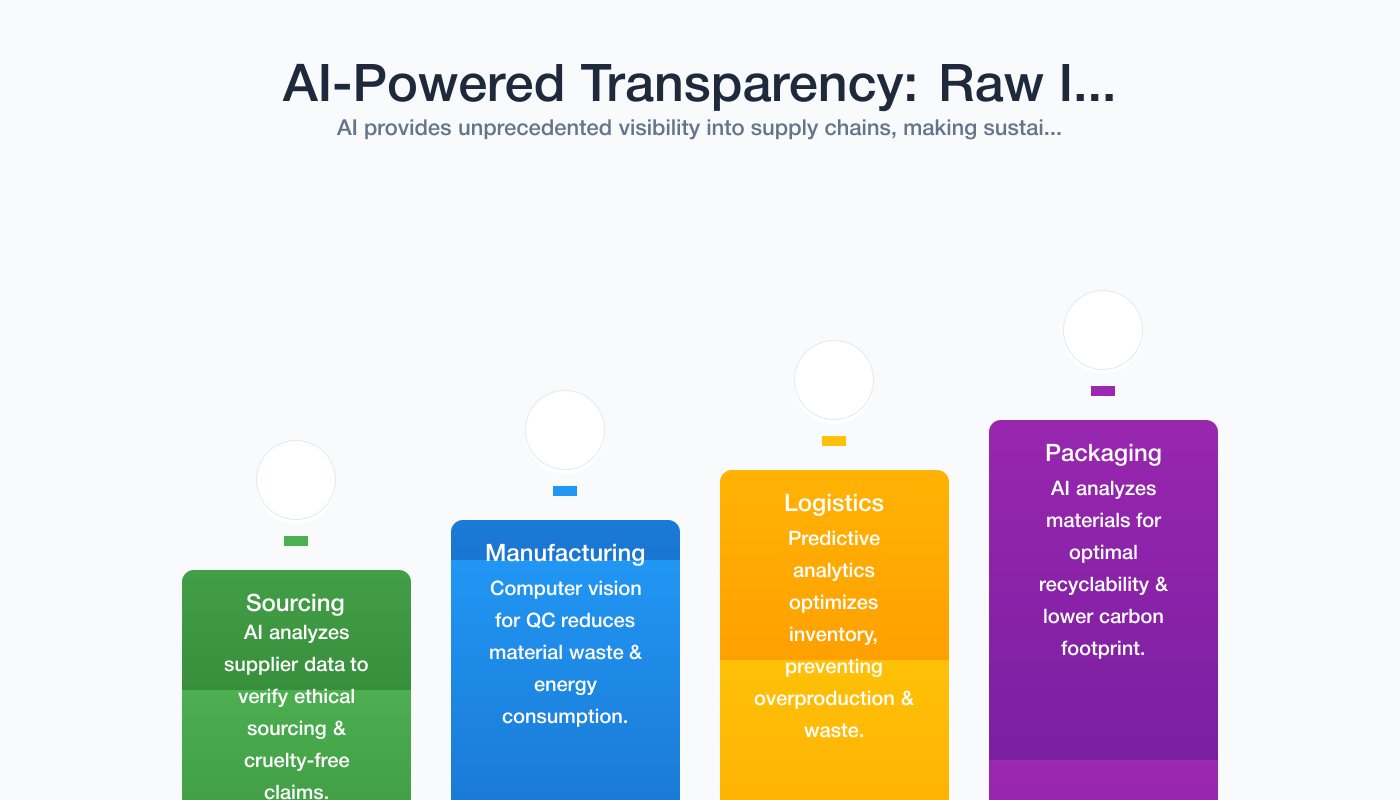
| Supply Chain Stage | AI Application | Sustainability Impact |
|---|---|---|
| Sourcing | Algorithmic analysis of supplier data | Verifies ethical sourcing and cruelty-free claims |
| Manufacturing | Computer vision for quality control | Reduces material waste and energy consumption |
| Logistics | Predictive analytics for inventory | Prevents overproduction and minimizes landfill waste |
| Packaging | Material analysis and design simulation | Optimizes for recyclability and lower carbon footprint |
By embedding intelligence at every stage, AI empowers brands to build more sustainable products from the inside out.
Personalization as Preservation: Reducing Waste Through Precision
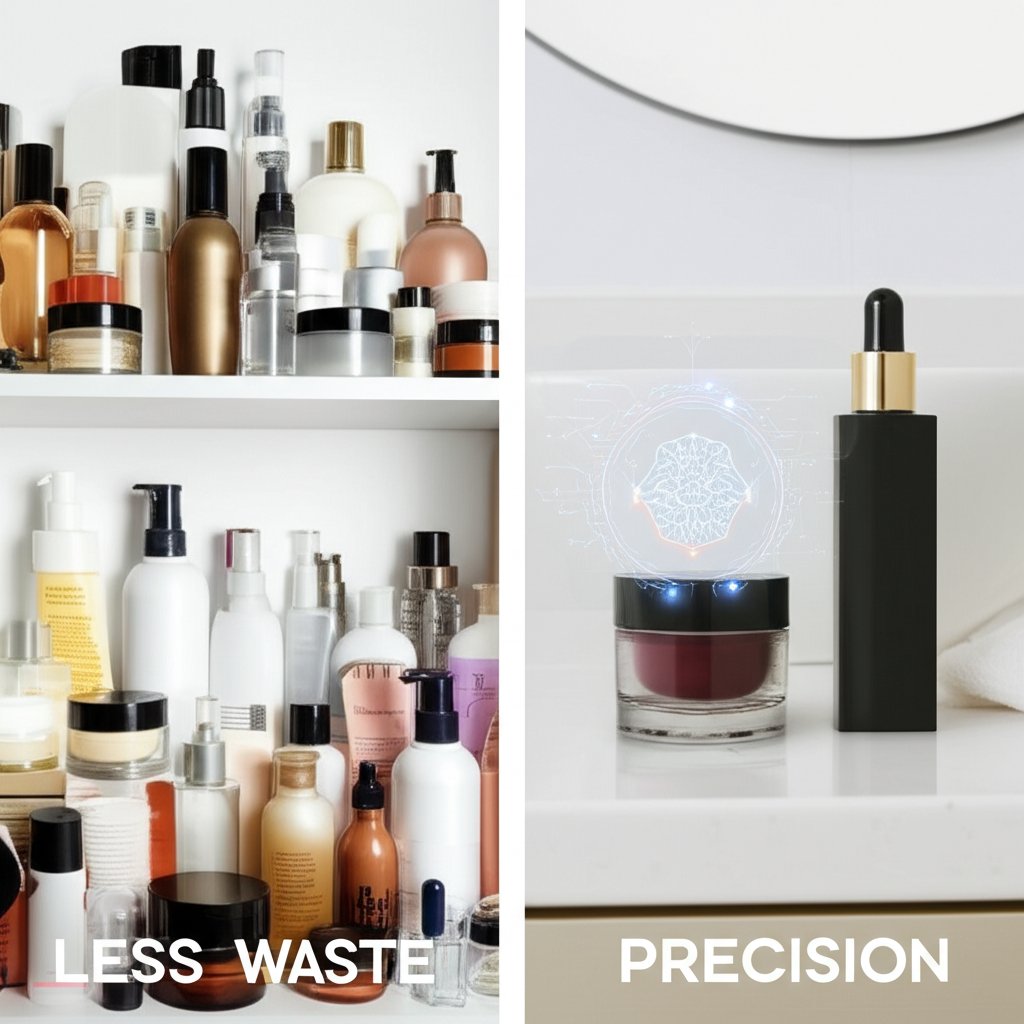
Many of us have a cabinet filled with half-used bottles[object Object]a testament to the trial-and-error approach to finding the right products. This collection represents not just wasted money, but significant environmental waste that accumulates over time. AI-driven personalization is emerging as a powerful sustainability tool. By analyzing an individual's unique skin characteristics with high precision, it recommends or even creates products that are far more likely to be effective. This shift from mass-market guessing to tailored solutions means consumers purchase fewer mismatched items, leading to a direct reduction in product and packaging waste. The efficacy of this technology is well-documented; research highlighted by (Data Science Connect) found that certain AI-based systems can analyze skin images with up to 98% accuracy for cosmetic suggestions. This precision manifests in several innovative ways, systematically closing the gap between consumer need and product reality.
| AI Application | How It Works | Sustainability Impact |
|---|---|---|
| AI Skin Diagnostics | Analyzes user photos to identify specific concerns like dehydration, redness, or fine lines. | Recommends targeted products from the start, reducing the purchase of ineffective treatments. |
| Virtual Try-On | Digitally overlays makeup shades or hairstyles on a user's live or static image. | Prevents buying the wrong shade, minimizing product returns and subsequent disposal. |
| Custom Formulations | Creates unique skincare formulas based on an individual's comprehensive AI analysis, similar to the advanced diagnostics offered by platforms like cosmi.skin. | Ensures high efficacy and user satisfaction, leading to less product abandonment and waste. |
These technologies collectively address a primary cause of waste in the beauty industry: the mismatch between product and person. The "skincare graveyard," a frequent topic of discussion in online communities, is a direct result of this disconnect. By ensuring a better fit from the start, hyper-personalized formulations and accurate recommendations not only improve user outcomes but also foster a more mindful consumption cycle. A consumer who finds an effective product quickly is less likely to continue searching and accumulating unused alternatives, as noted in consumer behavior studies from firms like Attest (2025).
By aligning product efficacy with individual needs, AI-powered personalization transforms the act of consumption into an act of conservation.
Green Chemistry: How AI is Designing a Cleaner Future
The conversation around sustainable beauty often centers on packaging, but a significant revolution is happening at a molecular level. Before a product ever reaches a shelf, its environmental journey begins with its core ingredients. Artificial intelligence is accelerating the shift towards green chemistry, enabling the discovery and creation of high-performance, sustainable beauty ingredients at a faster pace. By processing molecular datasets far beyond human capacity, AI can predict the environmental impact, toxicity, and biodegradability of new compounds. This allows researchers to move beyond traditional, resource-intensive trial-and-error, instead designing sustainable molecules from the ground up. The market reflects this shift, with projections showing significant growth in green chemistry solutions (IMARC Group 2025). This expansion is driven by technologies like AI-guided precision fermentation, a process where microorganisms are programmed to produce specific, high-purity ingredients. This method allows for the creation of complex molecules like vegan collagen and other bioactive proteins without relying on animal sources or environmentally taxing agricultural practices.

| Aspect | Traditional Ingredient Development | AI-Driven Green Chemistry |
|---|---|---|
| Discovery Time | Years of manual lab testing | Months or weeks of predictive modeling |
| Environmental Impact | Often reliant on petrochemicals or intensive agriculture | Focus on biodegradable, low-impact sources |
| Ingredient Source | Animal-derived, mined, or non-renewable | Bio-identical, lab-grown, or upcycled |
| Performance | Performance balanced against cost and availability | Optimized for high efficacy and specific benefits |
Beyond inventing novel molecules, AI also refines existing formulas for greater sustainability. Machine learning models analyze ingredient interactions to optimize for efficacy with fewer components. This leads to minimalist yet potent products, reducing the overall chemical footprint and minimizing the potential for skin irritation. This creative capability is critical for replacing legacy ingredients with high environmental costs, such as palm oil. AI can identify and help design lab-grown alternatives that mimic the performance of traditional ingredients without the associated deforestation. We see this innovation in action as companies launch products with AI-designed, skin-identical vegan collagens or fragrances that use ethanol upcycled from industrial carbon emissions, transforming waste into a valuable resource.
Ultimately, artificial intelligence is making green chemistry the new standard for innovation in the beauty industry.
The Ethical Algorithm: Confronting Bias and Protecting Data
The promise of AI in beauty is one of hyper-personalization, but this powerful innovation carries significant ethical responsibilities. To be truly beneficial, the technology must be as fair and secure as it is intelligent. The primary ethical challenge stems from the data used to train AI models. When these systems learn from limited or homogenous datasets[object Object]for instance, images predominantly featuring lighter skin tones[object Object]they develop a skewed understanding of human diversity. This results in a critical flaw known as algorithmic bias, where the technology's performance is unequal across different demographic groups. This bias has tangible consequences. An AI might fail to accurately identify a skin condition like hyperpigmentation on darker skin or recommend foundation shades that are not inclusive. In effect, a tool designed for personalization can end up reinforcing the very beauty standards it was meant to transcend. For AI to fulfill its potential as an empowering force, it must be consciously engineered for equity. This is not just a technical imperative but a clear consumer demand. Research from Attest (2025) reveals that 50% of consumers actively prioritize inclusivity in the brands they support, and 31% will walk away from companies that fail to represent them. This data transforms inclusivity from a feature into a core business necessity. Industry analysts are taking note of this shift. Reports from firms like (Blue Rhino Capital Insights) highlight a growing investment trend toward companies that can demonstrate a commitment to ethical AI development. The solution, as outlined by organizations like Data Science Connect, lies in the meticulous curation of globally representative training data. This involves building vast datasets that encompass a full spectrum of skin tones, facial structures, ages, and genders to ensure the AI performs accurately for every user. Correcting for bias is one half of the ethical equation; the other is a steadfast commitment to user privacy. When you upload a selfie for a skin analysis or answer questions about your concerns, you are entrusting a company with sensitive personal information. The responsibility to protect that data is paramount.
Note: When an AI tool requests your photo, you are providing sensitive personal data. Ethical brands are transparent about how this data is stored, who can access it, and for how long, ensuring your privacy is never compromised for the sake of a recommendation.
The goal is to leverage AI to break down historical beauty barriers, not construct new digital ones. This requires a vigilant commitment to auditing algorithms for fairness and building user trust through transparent data stewardship. The technology itself is neutral; its impact is determined by the conscious, ethical choices of its creators. For AI to be truly ethical, brands must proactively eliminate bias through inclusive data and uphold the highest standards of user privacy.
Your Role: A Guide for the Conscious and Connected Consumer
AI-powered tools place valuable insight at our fingertips, but real progress lies in how we apply that knowledge to our daily choices. This means using technology not to discover more products, but to choose fewer, better ones. By pairing the insights from AI tools with a mindful approach to consumption, you can create a beauty routine that is both personally effective and ethically sound. This intentional approach directly counters the cycle of waste driven by trends and impulse purchases. This shift toward minimalism reflects a broader consumer sentiment. Discussions across online communities reveal a growing frustration with complex, multi-step routines and a clear demand for simple, effective products in sustainable packaging. Consumers are increasingly questioning the narrative that more products equal better results. Here is a practical guide to making more conscious choices:
- Use AI as a Filter, Not a Funnel. Leverage tools like AI skin diagnostics, championed by innovators like cosmi.skin, or virtual try-ons to confirm a product’s suitability before purchasing, reducing the risk of buying something that goes unused. Resist the algorithm’s push toward an endless feed of new options and focus on what your analysis suggests you truly need.
- Demand Digital and Ethical Transparency. Scrutinize a brand’s claims. Do they openly discuss how their AI models are trained and what data supports their sustainability metrics? A truly ethical brand is transparent about both its technology and its environmental impact.
- Prioritize Routine Simplicity. The most sustainable product is the one you use completely. Focus on building a minimal, effective routine with multi-purpose products. This inherently reduces overconsumption, packaging waste, and resource expenditure from manufacturing and shipping.
- Champion Sustainable Formats. Actively support brands that invest in refillable packaging, concentrated formulas, and waterless products. Your purchasing power signals to the industry that these innovative, low-waste formats are not just a trend, but a core consumer expectation.
Technology is a powerful ally, but conscious consumption remains a fundamentally human choice. By using AI to inform rather than influence, you become a critical component in a truly sustainable beauty ecosystem.
The convergence of artificial intelligence and the beauty industry marks a pivotal moment, offering a tangible pathway towards more ethical and sustainable practices. AI is a practical force for good, reshaping how beauty products are conceptualized, produced, and consumed. It drives transparency and efficiency, streamlines supply chains, and optimizes manufacturing to reduce waste. Through personalization, it empowers consumers to make precise choices, minimizing the trial-and-error cycle that contributes to waste. Finally, AI accelerates innovation in green chemistry, leading to the rapid development of effective, biodegradable ingredients and ethical, animal-free alternatives.
To embark on your own journey towards a smarter, more conscious beauty routine, we encourage you to start exploring AI-powered tools. These intelligent solutions can offer personalized recommendations, enhance your understanding of ingredient transparency, and guide you towards products aligned with your ethical values. Ultimately, AI's potential to transform the beauty industry for the better is realized only when we commit to its responsible development and thoughtful application.
Tags
Related Articles

AI-Powered Customization: The Essential Future of Skincare
Demystifying AI in Skincare: Your Guide to Intelligent Algorithms