The AI Revolution in Acne Care: A Data-Driven Guide to Clearer Skin
Read about The AI Revolution in Acne Care: A Data-Driven Guide to Clearer Skin on Cosmi Skin
Acne affects a staggering 50 million Americans each year, transforming what should be a straightforward path to clear skin into a frustrating, prolonged journey. For many, the reality includes wait times exceeding a month just to see a dermatologist—a delay with significant physical and emotional costs.
Fortunately, a revolutionary shift is underway. Artificial Intelligence (AI) and Virtual Reality (VR) are no longer confined to sci-fi films; they are empowering us with tools capable of diagnosing acne with up to 97.6% accuracy and crafting truly personalized treatment plans.
This isn't about replacing human expertise, but rather augmenting it, providing smarter, faster, and more accessible solutions for clearer skin. Join us as we cut through the hype to reveal how these technologies work, their real-world applications, the challenges ahead, and what this means for the future of dermatology.
The Challenge with Traditional Acne Care
Acne isn't just a skin condition; it's a profound personal battle for millions. Despite its prevalence—affecting up to 50 million Americans annually—the traditional pathway to clear skin is often fraught with inefficiencies and emotional distress, leaving many feeling frustrated and overlooked.
One significant hurdle is the limited access to specialized care. Patients frequently face substantial wait times, with the average U.S. patient waiting over 36 days to see a dermatologist (Nolla Health data). This delay often means prolonged suffering and a worsening of conditions before professional help is even available, making early intervention difficult.
When care is finally accessed, traditional acne assessments can be subjective and time-consuming. Methods like manual lesion counting or global severity grading are prone to human variation, leading to inconsistent diagnoses and treatment plans. A systematic review highlighted these limitations, noting that traditional grading systems struggle with objectivity and reproducibility (PMC12194645). This subjectivity often translates into a trial-and-error approach to prescriptions. Patients frequently report adverse reactions to common treatments, such as the skin dryness from tretinoin or bacterial resistance with clindamycin, a sentiment echoed across forums like r/SkincareAddiction on Reddit.
Note: The "one-size-fits-all" model struggles to account for individual skin biology, leading to ineffective treatments and increased patient disillusionment.
Beyond the physical symptoms, the emotional and psychological toll of acne is immense. Many sufferers experience significant anxiety, depression, and a drop in self-confidence, impacting their daily lives. Online communities, particularly r/acne, frequently discuss feelings of dismissal by dermatologists and the profound impact acne has on mental well-being. This collective experience underscores a critical need for more responsive, personalized, and accessible solutions in current acne care.
How AI and VR are Redefining Acne Treatment
The landscape of acne management is undergoing a significant transformation, moving beyond conventional methods towards intelligent, personalized solutions powered by artificial intelligence (AI) and virtual reality (VR). This innovative approach offers a path to more accurate diagnostics, tailored treatment plans, and deeply engaging patient experiences.

AI algorithms, particularly Convolutional Neural Networks (CNNs), are revolutionizing how acne is identified and categorized. These advanced algorithms analyze high-resolution skin images to precisely detect lesions, classify specific acne types (like papules, pustules, or cysts), and grade severity with remarkable accuracy. Research shows AI models can achieve an accuracy as high as 97.6% in controlled settings, even when trained on synthetic data (Zein et al., 2024). This precision surpasses human assessment, providing clinicians with invaluable data-driven insights.
VR platforms, on the other hand, are enhancing patient understanding and adherence. They create immersive 3D models of a patient’s skin, allowing them to visualize the potential outcomes of treatments, such as laser therapy or chemical peels. This direct visualization fosters a deeper comprehension of the treatment process and its benefits, significantly boosting patient engagement. Viveport Human Skin VR, for instance, serves both professional training and patient education purposes.
The synergy of AI and VR creates interactive experiences that support the holistic management of acne. Some platforms integrate these technologies to offer guided skincare routines, virtual consultations, and even mindfulness exercises designed to mitigate the stress often associated with acne breakouts.
Specific applications are already making a tangible difference:
| Application Example | Technology | Primary Use Case | Benefit |
|---|---|---|---|
| AcneAI | AI | Diagnostic support | Clinicians receive data-driven insights into acne type and severity, streamlining treatment decisions. |
| DermaAI | AI | Predictive analysis | Identifies correlations between lifestyle factors (diet, cosmetics) and acne severity from large datasets. |
| Nolla Health | AI + VR | Patient engagement | Reduces clinician time per patient by 10x in operational success in Norway, enhancing efficiency. |
| The INKEY List | AI | Consumer-facing | Provides personalized product recommendations based on user-submitted skin analysis. |
Note: The true power lies in the integration, where AI identifies precise needs and VR empowers patients to understand and actively participate in their treatment journey.
By combining the analytical power of AI with the immersive educational capabilities of VR, a new, more effective, and engaging paradigm for acne management is emerging.
Reality Check: The Hurdles to Widespread Adoption
The promise of AI and VR in dermatology is exciting, offering personalized and precise solutions for skin conditions like acne. However, realizing this potential broadly requires confronting significant challenges.
A primary barrier is the substantial investment required for developing and implementing sophisticated AI/VR tools. This often translates to higher costs for consumers or healthcare providers, significantly limiting accessibility, especially in underserved regions where advanced dermatological care is already scarce.
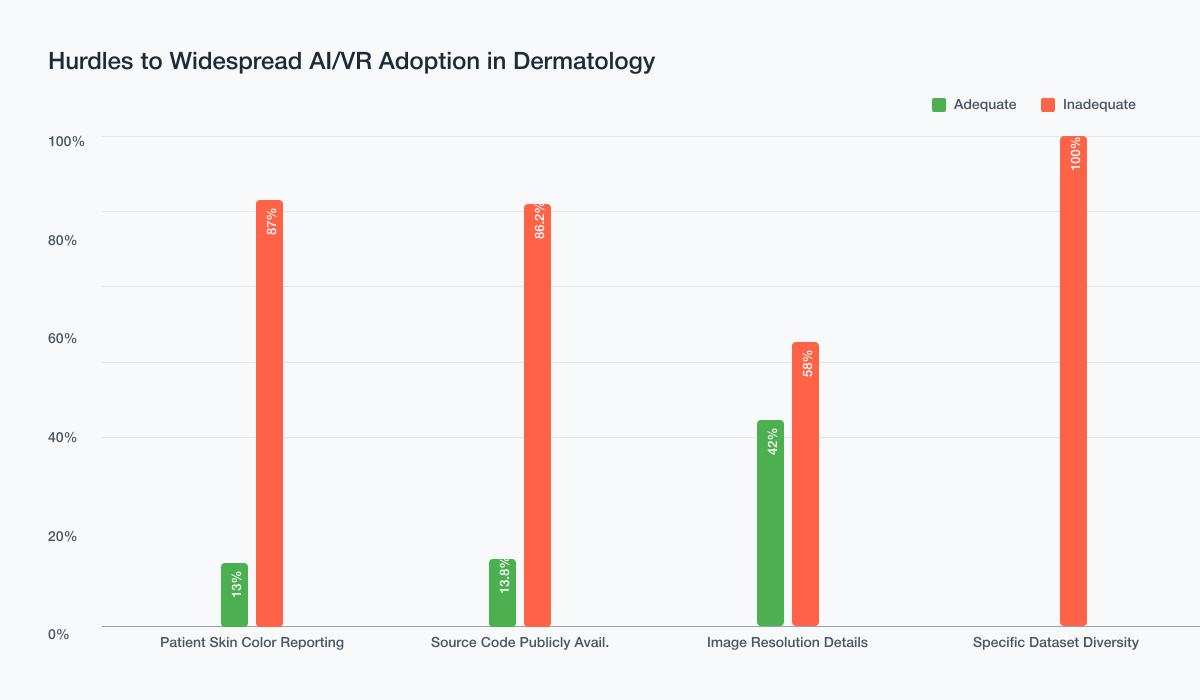
Perhaps the most pressing concern is dataset bias. Many AI models are trained on narrow, non-diverse datasets, often reflecting a specific demographic. For instance, public datasets like ACNE04 and AcneSCU consist exclusively of Han Chinese subjects (PMC12194645). A scoping review noted that only 13% of studies reported on patient skin color, leading to lower accuracy and potential misdiagnosis for under-represented skin tones (pubmed.ncbi.nlm.nih.gov/41199593). This lack of inclusivity creates a serious flaw in the very foundation of AI-driven diagnostics.
Data privacy presents another major ethical and practical challenge. These technologies often require handling sensitive facial imagery and personal health information. Ensuring robust security protocols and transparent data governance is paramount to protect user confidentiality and build trust.
Note: The generation of synthetic datasets using techniques like Generative Adversarial Networks (GANs), as explored by Zein et al. (2024), offers a promising workaround for augmenting diverse training data while potentially safeguarding real patient privacy. However, its effectiveness still requires rigorous validation against real-world populations.
Furthermore, a pervasive lack of transparency hinders progress and external validation. A systematic review revealed that only 13.8% of reviewed studies made their source code publicly available (PMC12194645). Critically, over 58% of studies failed to report essential details like image resolution, undermining the reproducibility of their findings. This opacity erodes scientific integrity and slows the independent verification necessary for widespread clinical adoption.
Overcoming these significant challenges is essential for AI-driven dermatology to become truly equitable and reliable.
Getting Started: A Practical Guide to AI-Powered Skincare

Embracing AI for clearer skin can be a powerful step, but it’s crucial to approach it as an informed consumer. Think of AI as your smart co-pilot, guiding you, rather than an infallible oracle. Here’s how to navigate this exciting new landscape effectively:
Research the Company Thoroughly
Start by investigating the team behind the AI app or service. Look for transparent privacy policies detailing how your sensitive data (like facial imagery) is handled. Confirm the involvement of dermatologists or skincare experts in their development. Crucially, seek information on the diversity of their training data to ensure the AI's recommendations are likely accurate for your skin tone and type. Commercial platforms like Nolla Health, for example, combine AI diagnosis with human clinician oversight.Use AI as a Supplementary Resource
AI tools excel at analysis and personalized recommendations, but they are not a replacement for professional medical advice. For severe, persistent, or rapidly worsening acne, always consult a human dermatologist. AI is a powerful assistant, not your sole healthcare provider.Be Consistent and Patient
Just like any effective skincare regimen, AI-driven plans demand adherence. Utilize the app's tracking tools to monitor your progress, but give any new routine ample time—at least 4-6 weeks—to show results. Skincare is a journey, not an overnight fix.Remember the Skincare Fundamentals
AI can guide product choices, but it can't manage everything. Maintain a consistent cleansing routine, ensure adequate sleep, and work to understand your personal triggers (like diet or stress). Skincare communities, such as those found on Reddit (r/acne), frequently emphasize the importance of these holistic basics alongside targeted treatments.Know When to Pause and Consult
If a prescribed treatment from an AI service causes adverse reactions, such as severe irritation, redness, or breakouts, stop immediately. Your skin's response is paramount. Consult a human dermatologist without delay. Your safety and comfort should always take precedence over algorithm-driven advice.
Integrating AI wisely through data-driven platforms can make your skincare routine more effective and tailored than ever before.
The journey to clearer skin, traditionally fraught with delays and generic solutions, is on the cusp of a profound transformation. Artificial intelligence and virtual reality are not just buzzwords; they represent a tangible shift towards more precise, accessible, and personalized acne care. This revolution promises to empower individuals with tools that bridge the gap between need and effective treatment, fostering a new era of proactive skin health management.
Here are the key takeaways from this evolving landscape:
- AI-powered diagnostics offer high accuracy, enabling rapid, personalized treatment plans that bypass traditional wait times for dermatological appointments.
- Immersive VR experiences enhance patient education, allowing for a deeper understanding of acne and treatment protocols, leading to improved adherence and outcomes.
- Addressing data bias and ethical considerations is crucial for ensuring these advanced technologies benefit everyone equitably, laying the groundwork for widespread, trustworthy adoption.
The integration of AI and VR into acne care holds immense potential to democratize access and elevate personalized treatment. However, its true impact will depend on continued responsible innovation and a commitment to overcoming current challenges.
As these technologies mature, consider exploring platforms that leverage data-driven insights for tailored skincare. Embracing personalized skincare solutions can offer a proactive path to understanding and managing your complexion with unprecedented precision. The future of clearer skin is increasingly smart, accessible, and aligned with your unique needs.
Tags
Related Articles
From Acne to Radiance: Proven AI Solutions for Clear Skin
Virtual Visits, Real Results: Essential AI Dermatology Insights