Beyond Sunscreen: A Practical Guide to Sun-Protective Clothing
Read about Beyond Sunscreen: A Practical Guide to Sun-Protective Clothing on Cosmi Skin
You diligently apply sunscreen, committed to protecting your skin from the sun's harsh rays. But what if your everyday clothing is leaving you surprisingly vulnerable to harmful UV radiation? Many assume a typical t-shirt offers adequate protection, yet the truth is far more complex and often overlooked.
It’s time to move beyond sunscreen and embrace a comprehensive strategy for skin defense. This guide will empower you to understand and choose effective sun-protective clothing, transforming how you shield yourself from head to toe.
We'll decode UPF ratings, uncover the secrets of sun-safe fabrics, and provide practical recommendations for every activity and budget. Prepare to make informed decisions that ensure your skin remains healthy and protected on any outdoor adventure.
Why Your T-Shirt Isn't Enough: The Case for Sun-Protective Clothing
That common white cotton T-shirt, a staple for many sunny days, offers surprisingly little defense against harmful UV rays. With an Ultraviolet Protection Factor (UPF) of merely 7, its protective capabilities diminish further to a scant UPF 3 when wet, leaving your skin vulnerable. This stark reality highlights the crucial need for more reliable sun protection.
Sun-protective clothing is engineered to provide a consistent physical barrier, eliminating the need for the constant reapplication that lotions require. This makes it an incredibly effective and hassle-free solution for safeguarding your skin. The Skin Cancer Foundation consistently recommends sun-protective clothing as a primary line of defense against UV radiation, underscoring its superior efficacy.
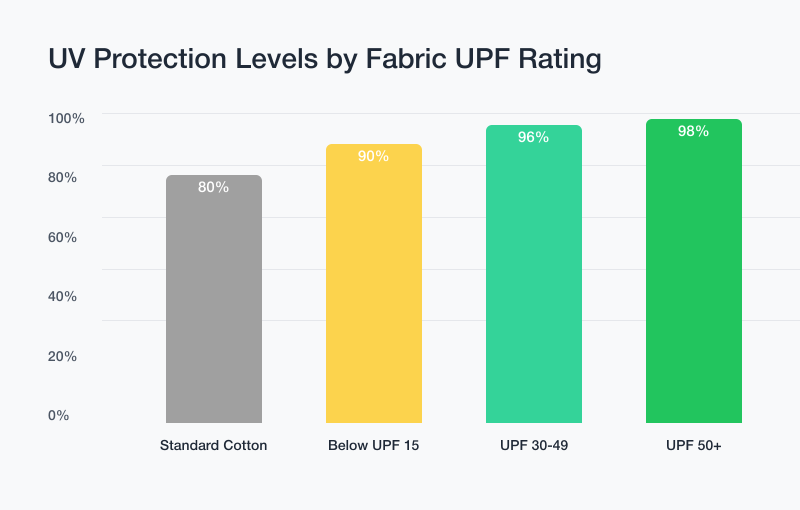
Understanding UPF ratings is key to making informed choices. A garment with a UPF of 50+ effectively blocks 98% of the sun's harmful UV rays, offering substantial protection compared to everyday apparel. When selecting sun-protective wear, fabric choice is paramount; synthetics like polyester often outperform cotton due to their tighter weave and inherent UV resistance. Additionally, dark, tightly woven, and loose-fitting clothes generally provide better protection. You might choose between versatile button-ups for adaptable coverage or high-coverage hoodies for maximum protection, depending on your activity. Don't forget wide-brimmed hats and other accessories to complete your sun-safe ensemble. Effective budget-friendly options are also readily available, making robust sun protection accessible to everyone.
Note: A standard wet T-shirt offers minimal protection (UPF 3), whereas certified UPF 50+ clothing blocks 98% of UV rays, making it a superior choice for consistent defense.
While sunscreen is essential for exposed skin, incorporating certified UPF clothing into your daily wear is the most effective and hassle-free strategy to minimize long-term skin damage from UV exposure.
Decoding UPF Ratings: A Guide to Fabric Sun Protection
Protecting our skin from the sun's harmful rays goes beyond sunscreen; the clothes we choose play a pivotal role. But how do you know if your favorite shirt truly offers adequate protection? This is where UPF ratings come in, offering a clear, scientific standard for sun-safe apparel. Understanding these ratings empowers you to make informed decisions for your skin's health.
UPF, or Ultraviolet Protection Factor, is a standardized measurement indicating how much UVA and UVB radiation a fabric blocks. It's a precise, lab-tested guarantee of a garment's ability to shield your skin. This comprehensive rating considers both types of harmful UV rays, offering a more complete picture of protection.
It’s crucial to distinguish UPF from its more commonly known counterpart, SPF (Sun Protection Factor).
| Feature | UPF (Ultraviolet Protection Factor) | SPF (Sun Protection Factor) |
|---|---|---|
| Measurement | Amount of UVA and UVB radiation blocked by fabric | Time it takes for skin to redden from UVB rays |
| Application | Apparel and textiles | Sunscreen and topical products |
| Scope | Blocks both UVA (aging) and UVB (burning) rays | Primarily measures protection against UVB (burning) rays |
UPF measures a fabric's effectiveness against both UVB and UVA rays, whereas SPF in sunscreen primarily measures protection against UVB rays. This distinction highlights why UPF is the gold standard for fabric-based protection.
Deciphering UPF labels is straightforward once you know the numbers. Fabrics below UPF 15 are not considered sun-protective by industry standards. For meaningful defense, look for these ratings:
- UPF 30-49: Offers "very good" protection, blocking between 95.7% and 97.4% of UV radiation.
- UPF 50+: Rated as "excellent" protection. A UPF 50 fabric, for instance, blocks 98% of the sun's rays, allowing less than 2% of UV transmission.
Note: A fabric must achieve a UPF of 50 to qualify for The Skin Cancer Foundation’s Seal of Recommendation, a rigorous endorsement of its protective capabilities. A standard cotton t-shirt might offer a UPF of only 5, allowing over 20% of UV rays to reach your skin, while a UPF 50+ garment offers nearly complete blockage.
When shopping for activewear, swimwear, or everyday clothing designed for sun exposure, always check the label for a UPF rating. This simple step ensures you're investing in true protection, not just another piece of fabric. A garment’s UPF rating is a lab-tested guarantee of its ability to block UV radiation, making it the single most reliable factor when selecting sun-safe apparel.
Beyond the Label: Key Characteristics of Sun-Safe Fabrics
Not every garment comes with a clear Ultraviolet Protection Factor (UPF) label. Yet, understanding the intrinsic properties of clothing empowers you to make smarter choices, even with items already in your wardrobe. The sun-protective quality of any garment is determined by an interplay of its material, color, weave, and fit—attributes you can assess to make smarter choices without a certified rating.

Fabric Composition: The Material Matters
Not all fabrics are created equal when it comes to blocking UV radiation. The type of fiber significantly impacts protection.
- Synthetics vs. Naturals: Synthetic fibers, such as polyester and nylon, inherently excel at disrupting UV light due to their chemical structure. In contrast, natural fibers like cotton, linen, or rayon generally offer less protection because their looser fibers allow more UV rays to penetrate.
Note: While synthetics lead in protection, modern fabric engineering means many UPF garments blend high-tech synthetics to be both protective and breathable, often incorporating features like moisture-wicking.
Weave and Density: A Tighter Barrier
Think of your clothing as a physical barrier; the tighter the weave, the more difficult it is for UV rays to find a path to your skin.
- Visual Test: A simple way to check density is to hold the fabric up to a light source. If you can easily see light passing through, it offers minimal protection. Densely woven cloth, like denim, canvas, or performance-grade synthetics, creates a much more formidable shield.
This dense construction leaves less room for UV radiation to penetrate, offering a substantial defense.
Color: Your Garment's UV Absorption Power
The color of your clothing plays a surprisingly crucial role in how well it protects you from the sun.
- Darker, Brighter Hues: Darker and brighter colors absorb more UV radiation rather than allowing it to pass through to your skin. A navy blue shirt, for example, absorbs more harmful rays than a light pastel one, preventing them from reaching your skin.
Conversely, lighter colors reflect some UV rays, but they also allow more to pass through the fabric itself.
Fit and Condition: Optimizing Your Protection
Beyond the fabric itself, how your clothing fits and its overall condition also dictate its sun-protective capabilities.
- Loose-fitting is Best: Loose-fitting clothing offers superior protection. When garments are stretched tight against your body, the fibers can separate, creating larger gaps that UV radiation can exploit.
- Dry and Durable: The condition of your fabric is equally important. For many materials, wet fabric can significantly reduce its UPF rating. Similarly, worn-out, faded, or threadbare clothing loses its protective ability as its weave degrades.
The most effective sun protection comes from understanding the holistic interplay of these fabric properties.
Choosing Your Armor: Sun Hoodies vs. Button-Up Shirts
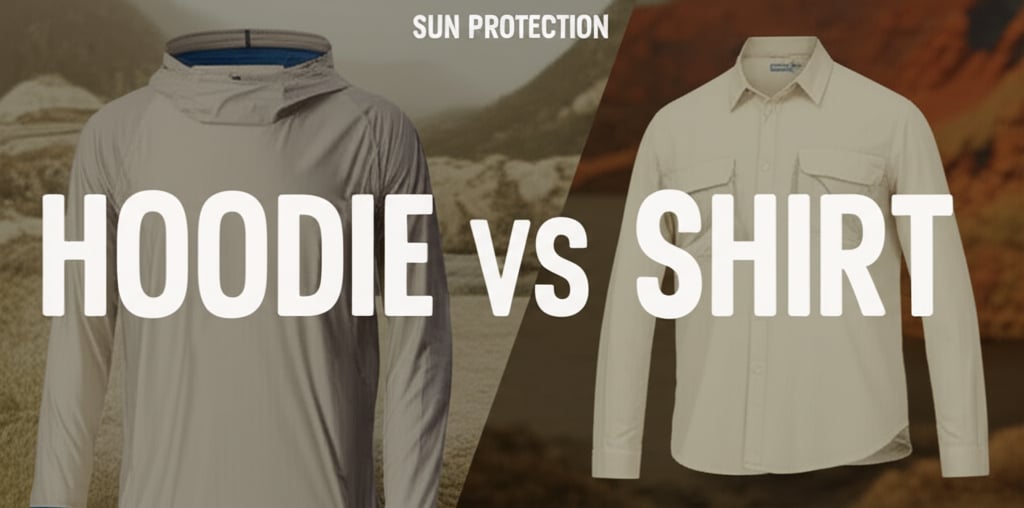
While sunscreen forms a vital barrier, the right clothing acts as your first line of defense. The market offers a diverse range of sun-protective apparel, but two styles frequently emerge as top contenders for outdoor enthusiasts: the sun hoodie and the button-up shirt. Deciding between them often comes down to your activity, personal style, and the specific level of coverage you require. Each offers distinct advantages, making the choice a trade-off between integrated coverage for active pursuits and versatile ventilation for varied settings.
The Integrated Shield: Sun Hoodies
Sun hoodies are engineered for maximum, built-in protection, making them a go-to for high-exposure activities like fishing, hiking, or running. Their design prioritizes comprehensive coverage: an integrated hood shields your head and neck, often eliminating the need for a separate hat, while many models include thumb loops to extend protection over the back of your hands. This seamless design minimizes gaps where UV rays might penetrate, providing continuous defense during extended periods outdoors.
The appeal of sun hoodies also lies in their comfort and fabric technology. Many performance hoodies, such as the widely praised REI Co-op Sahara Shade Hoodie, utilize soft, stretchy, T-shirt-like fabrics that feel lightweight and breathable. These materials often incorporate advanced moisture-wicking properties, keeping you cool and dry even when activity levels are high. When considering a sun hoodie, look for features like a helmet-compatible hood if you cycle or climb, and those essential thumb loops for enhanced hand coverage. Brands like Cotopaxi exemplify how these garments can blend high performance with casual aesthetics, proving sun protection doesn't have to sacrifice style.
The Versatile Ventilator: Button-Up Shirts
In contrast to the integrated design of sun hoodies, button-up shirts offer unmatched versatility. They excel at bridging the gap between 'trail-to-town' use, allowing you to transition from a morning hike to a casual lunch without a wardrobe change. The primary strength of a sun-protective button-up lies in its adjustable ventilation. Buttons can be opened to allow airflow, while sleeves can be rolled up and secured with tabs, providing flexible comfort as conditions change. Critically, a flip-up collar can add crucial neck protection, complementing the generous sleeve lengths that keep arms shielded.
Materials for button-up sun shirts tend to be more structured than those of hoodies, yet still lightweight and quick-drying. The Mountain Hardwear Canyon Long Sleeve, for instance, is celebrated for its blend of durability and performance, making it a reliable choice for diverse environments. Key features to seek out include back vents for enhanced airflow, roll-up sleeve tabs for convenience, and chest pockets for small essentials. The adaptability of these shirts means they pair exceptionally well with other protective gear, like a wide-brimmed hat, to offer comprehensive protection suitable for a vast array of outdoor activities.
Making Your Choice: Activity, Coverage, and Style
When deciding between a sun hoodie and a button-up, consider your primary activities and preferences. For intense, continuous sun exposure where maximum, fuss-free coverage is paramount—think fishing, trail running, or paddling—the integrated design of a sun hoodie is often superior. For those who value adaptability, varying levels of ventilation, and a garment that transitions smoothly between active and casual settings, the button-up shirt is an excellent choice.
Note: Both options leverage UPF (Ultraviolet Protection Factor) ratings, which indicate how much UV radiation a fabric blocks. Aim for clothing with a UPF of 30 or higher for effective protection.
The choice boils down to balancing your need for continuous, integrated protection against the desire for flexible ventilation and style. Sometimes, having both in your wardrobe is the most strategic approach, allowing you to tailor your sun protection to each specific outing.
Your skin deserves continuous protection, and selecting the right sun-protective clothing is a fundamental step in achieving that.
Head-to-Toe Protection: Don't Neglect Hats, Pants, and Accessories
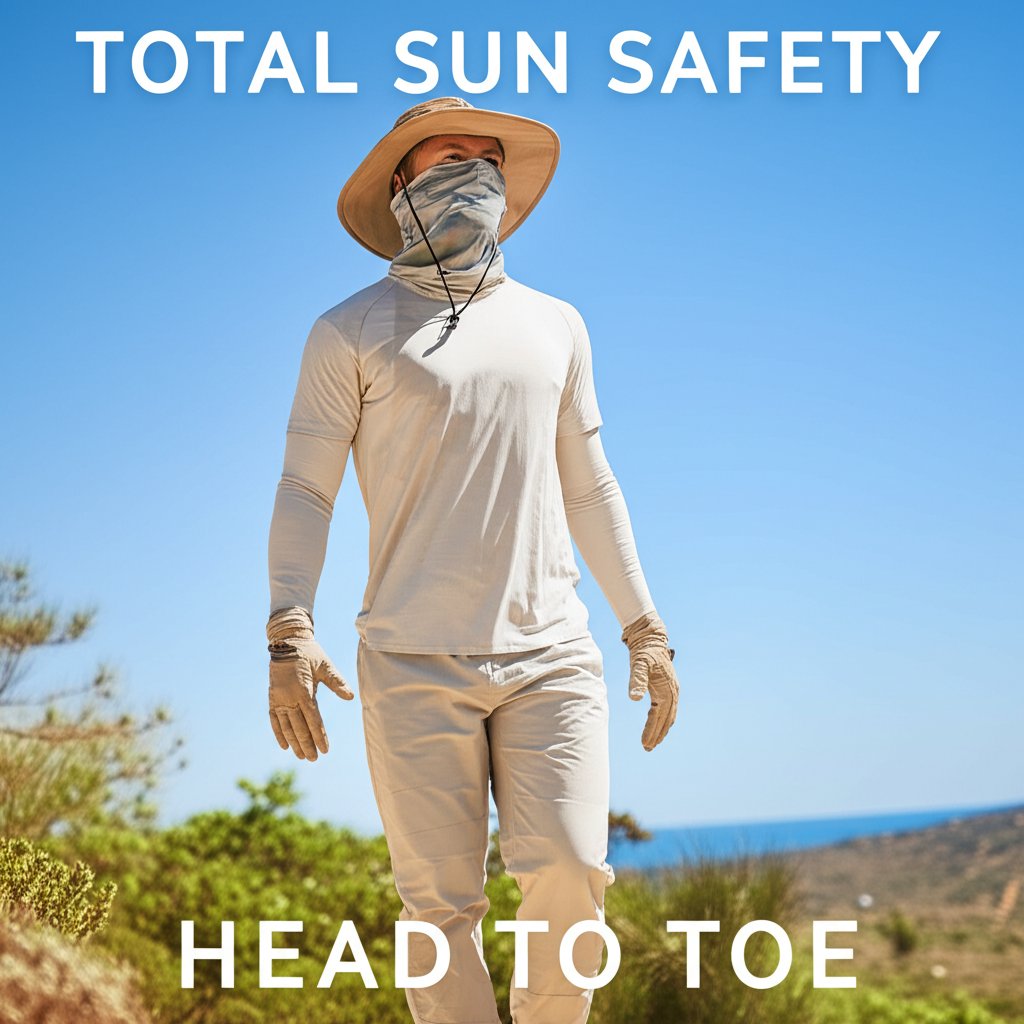
While a UPF-rated shirt offers crucial protection, comprehensive sun safety extends far beyond. Many overlook the vital role other garments and accessories play in safeguarding often-exposed and vulnerable areas. Achieving complete sun safety requires a holistic approach, incorporating a wide-brimmed hat, full-length legwear, and targeted accessories for high-exposure zones.
Hats are non-negotiable for anyone spending time outdoors. To effectively shield your face, ears, and neck, choose a hat with an all-around brim of at least three inches. Baseball caps fall short, failing to cover the ears, chin, or back of the neck, leaving these highly susceptible areas exposed.
Note: Avoid loosely woven straw hats, which can allow significant UV penetration. Prioritize hats made from tightly woven canvas, dense denim, or specifically UPF-rated synthetic materials for optimal protection.
For legwear, lightweight, UPF-rated long pants are an excellent choice for extended outdoor time. They offer a substantial barrier against UV radiation, providing more comprehensive coverage than shorts. Modern fabrics are breathable and moisture-wicking, ensuring comfort even in warm climates.
Finally, specialized accessories protect those frequently missed but vulnerable spots. The hands, neck, and face are highly susceptible to sun damage, as skin cancer frequently occurs on the head and neck.
Consider integrating these:
- Sun Gloves: These lightweight gloves protect the back of your hands, an area prone to showing signs of sun damage, especially during activities like driving or gardening.
- Neck Gaiters: Versatile fabric tubes, like the Buff CoolNet UV, offer UPF 50+ protection by covering your neck, chin, and even parts of your face. Modern accessories feature lightweight, moisture-wicking performance fabrics for comfort and active cooling.
By consciously extending your sun protection to include these vital head-to-toe elements, you create a robust shield against harmful UV rays. Investing in these items is an investment in your skin’s lasting health.
Sun Protection on a Budget: How to Stay Safe Without Overspending
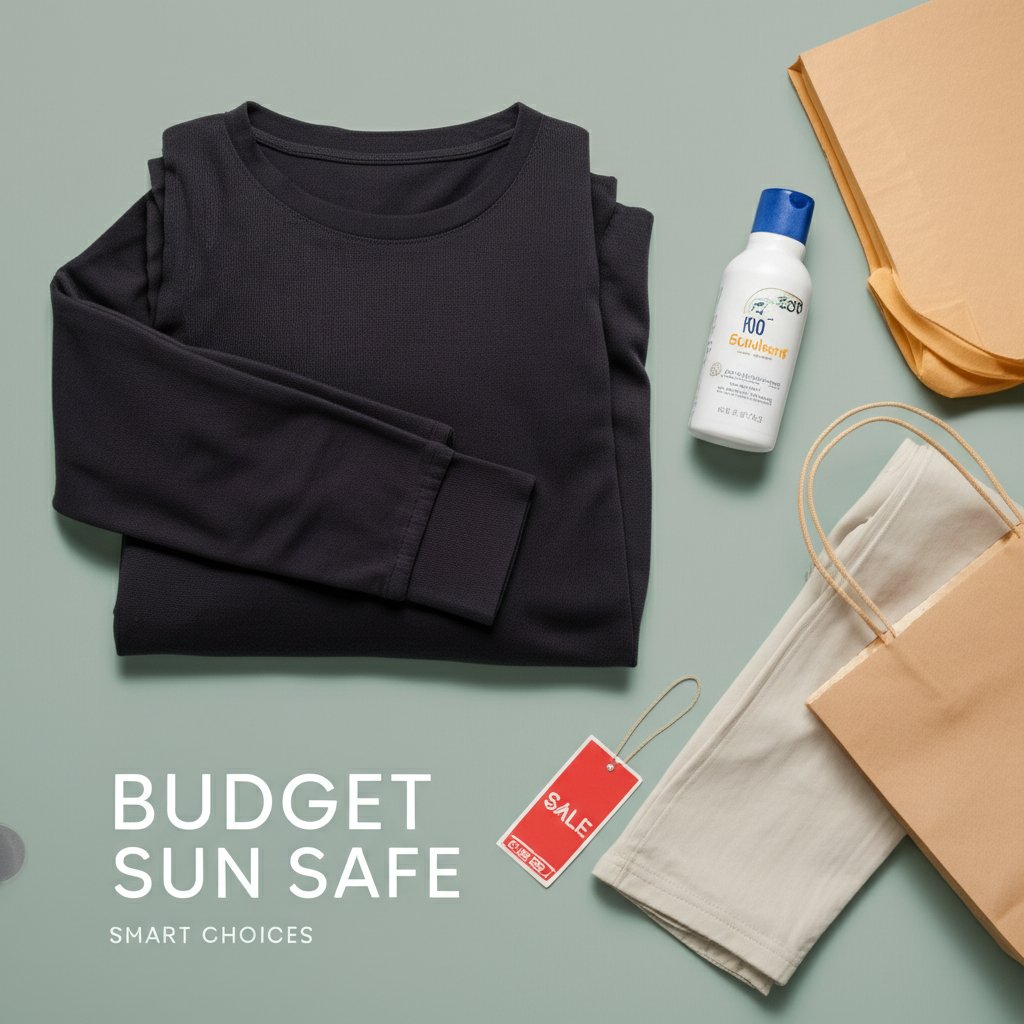
Protecting your skin from the sun's harmful UV rays doesn't require a premium budget. Many believe specialized UPF clothing is prohibitively expensive, but effective sun protection is accessible to everyone. By leveraging existing clothing, seeking out value-driven brands, and utilizing affordable aftermarket treatments, you can stay safe without overspending.
Start by thoughtfully assessing your current wardrobe. Many everyday garments already offer decent sun protection. Darker, tightly woven synthetic fabrics block more UV radiation than light-colored, loosely woven cotton. A long-sleeved dark shirt you already own can provide surprising protection, minimizing the need for immediate, specialized purchases.
When you are ready to invest, explore budget-friendly brands that deliver exceptional value. Brands like Baleaf consistently receive high marks for their durable, UPF 50+ rated hoodies and shirts at a fraction of the cost of premium alternatives. It's important to remember that a UPF rating of 50 on a budget garment blocks the same amount of UV as a premium one because UPF is a standardized rating. Independent reviews often praise the impressive durability of budget picks like the Baleaf UPF 50 Hoody.
Beyond purchasing, you can enhance your existing clothes with laundry additives. Products like Rit SunGuard allow you to "wash-in" a UPF rating of 30 into your clothes, making them more sun-protective. This treatment adds UV-absorbing chemicals to the fabric during a wash cycle and typically lasts for about 20 washes. It’s a remarkably cost-effective way to upgrade your wardrobe without buying new items.
For those eyeing higher-end items, strategic shopping is key. Major outdoor retailers frequently hold end-of-season sales where you can find premium gear from brands like Mountain Hardwear or REI at significant discounts. Waiting for these sales allows you to acquire superior quality and performance without the full price tag.
Achieving superior sun protection is within reach for any budget through informed choices and smart strategies.
Frequently Asked Questions
Navigating the world of sun protection can sometimes lead to practical questions about combining different strategies. This section addresses common inquiries to help you confidently integrate sun-protective clothing into your daily routine.
Do I still need sunscreen with UPF clothing?
Yes, absolutely. While UPF clothing provides excellent protection for the skin it covers, it's crucial to remember that your exposed skin still requires defense. Areas like your face, neck, ears, hands, and feet should always receive a generous application of a broad-spectrum sunscreen with an SPF of 30 or higher. Dermatologists consistently emphasize applying sunscreen to all uncovered skin.
Does washing reduce a garment's UPF rating?
It can, depending on how the garment achieves its UPF rating. If the UPF comes from the inherent structure and weave of the fabric (like tightly woven polyester), its protection tends to be quite durable. However, if the garment's UPF relies on a chemical finish, that finish can gradually diminish over time and with repeated laundering. Always check the garment's care label for specific instructions.
Is UPF clothing safe for kids?
Yes, UPF clothing is not only safe but highly recommended for children. Children's skin is more sensitive and susceptible to sun damage than adult skin, and early sun exposure significantly increases the risk of serious skin problems later in life. Many reputable brands offer extensive lines of UPF clothing specifically designed for children, providing reliable protection and peace of mind.
What's the difference between men's and women's sun shirts?
Often, the primary differences lie in the cut, fit, and aesthetic details rather than the core UPF protection. A women's sun shirt might feature a more tapered cut and wider color options, while men's shirts typically have a straighter fit. The UPF rating itself is universal, so the most important factor is choosing a garment that fits you comfortably and allows for ease of movement, regardless of its gender label. Proper use and care, combined with sunscreen for exposed skin, are essential for maximizing the benefits of your sun-protective apparel.
Relying solely on sunscreen is an incomplete strategy for comprehensive sun protection. Embracing sun-protective clothing offers a powerful, tangible layer of defense against harmful UV radiation, empowering you to enjoy the outdoors with greater confidence and peace of mind.
Making informed choices about your wardrobe is a proactive step towards long-term skin health. To summarize, here are the essential insights to guide your selection:
- Understand UPF Ratings: Prioritize garments with a certified UPF rating of 30+ for effective blockage of UVA and UVB rays.
- Focus on Fabric and Design: Look beyond the label to evaluate fabric density, weave, and color, alongside thoughtful design features like high collars and long sleeves.
- Embrace Head-to-Toe Coverage: Adopt a comprehensive approach by selecting wide-brimmed hats, protective pants, and other accessories to shield often-neglected areas.
Integrating sun-protective clothing into your daily life doesn't replace other sun safety practices, but enhances them. It's about building a robust, everyday shield against the sun's persistent presence. Armed with this knowledge, you can confidently select pieces that offer both style and superior sun defense. Take the step today to thoughtfully curate your wardrobe, transforming how you protect your skin every day.
Tags
Related Articles

Beyond Wrinkles: Essential Proactive Anti-Aging Skincare Guide

Broad-Spectrum SPF30 Daily: Your Essential Guide to Unrivaled Skin Protection