PDRN Benefits: Unlocking Salmon DNA for Skin Rejuvenation
Read about PDRN Benefits: Unlocking Salmon DNA for Skin Rejuvenation on Cosmi Skin
From the hyper-competitive world of Korean skincare, an intriguing ingredient has risen to prominence, often sparking curiosity: Is PDRN, or 'salmon DNA', just another fleeting trend?
The data-driven insights reveal a profound truth: Polydeoxyribonucleotide (PDRN) is far from a temporary fix. This remarkable compound, derived from salmon DNA, offers unparalleled biocompatibility, working deep within your skin at a cellular level to stimulate its natural repair systems for truly transformative results.
In this comprehensive guide, we'll dive into the regenerative science behind PDRN, exploring its proven benefits for anti-aging and scar repair, and how it offers a sustainable path to vibrant skin health. Prepare to understand if this advanced, science-backed ingredient is the intelligent choice to achieve your personalized skincare goals.
The Science of Skin Regeneration: How PDRN Works at a Cellular Level
Understanding how PDRN revitalizes skin begins deep within our cells, far beyond surface-level treatments. Polydeoxyribonucleotide (PDRN) isn't just another ingredient; it functions as a biological signaler, activating the skin's innate repair and regeneration pathways to rebuild its structure from within, rather than just treating surface-level symptoms. This sophisticated mechanism taps into our body
s natural healing processes.

At its core, PDRN provides the essential building blocks for DNA synthesis. When skin cells are damaged or aged, their DNA repair processes can become sluggish. PDRN steps in by utilizing the 'salvage pathway,' a crucial cellular mechanism that recycles existing DNA fragments to construct new genetic material. This accelerates cellular repair, helping damaged cells mend themselves efficiently (Research data: Supports the skin's 'salvage pathway' to repair damaged cells). Think of it as supplying high-quality raw materials directly to a construction site needing urgent repairs.
Furthermore, PDRN significantly stimulates the activity of fibroblasts. These are the powerhouses of our skin, responsible for producing vital structural proteins like collagen and elastin. By boosting fibroblast function, PDRN encourages the natural synthesis of these proteins, which are fundamental for maintaining skin's firmness, elasticity, and overall structural integrity. Research shows it activates enzymes linked to elasticity, leading to improved skin resilience (Research data: Stimulates fibroblasts to produce collagen and elastin).
Beyond its regenerative prowess, PDRN possesses notable anti-inflammatory properties. This is critical for calming irritated skin and supporting its recovery, especially after procedures like laser treatments or chemical peels. Its ability to reduce inflammation aids in a smoother, faster healing process and helps maintain a healthy skin barrier (Research data: Reduces inflammation and supports skin barrier recovery). Clinical studies show PDRN speeds up wound healing in surgical donor sites, underscoring its therapeutic potential.
One of PDRN's key advantages lies in its structural similarity to human DNA. This biocompatibility ensures that it is readily recognized and utilized by the body's cells safely and effectively, minimizing the risk of adverse reactions. This intrinsic compatibility makes PDRN a powerful and gentle ally in the quest for skin rejuvenation. For those seeking deeper penetration and enhanced results, its effectiveness is often optimized when paired with microneedling, which creates channels for deeper access to these cellular pathways.
Note: PDRN acts directly at a cellular level, engaging the skin's natural repair mechanisms rather than merely masking superficial concerns.
This detailed cellular interaction makes PDRN a highly effective compound for comprehensive skin restoration.
The Core Benefits of PDRN for Skin Health and Appearance
Moving from its intricate cellular science, PDRN's benefits translate into a spectrum of visible improvements for skin health and appearance. The cellular repair functions of PDRN directly address key concerns, from aging and scarring to overall skin radiance, offering a transformative approach to skincare.

One of the most celebrated benefits is its ability to accelerate healing and reduce scarring. PDRN's regenerative properties are instrumental in repairing damaged tissue, making it highly effective for diminishing the appearance of acne scars, post-inflammatory hyperpigmentation, and speeding up recovery after various aesthetic procedures. It supports the organized reconstruction of tissue, leading to smoother, less noticeable scars. For instance, Reddit users with sensitive skin have reported that it helped with breakouts and brightened freckles, highlighting its reparative and tone-improving qualities.
PDRN is also a powerful stimulator of collagen and elasticity. By robustly activating fibroblasts, it directly encourages the production of new collagen and elastin fibers. This revitalizes the skin's internal support structure, leading to a significant reduction in the appearance of fine lines, wrinkles, and sagging skin. Cosmetic studies have found measurable improvements in wrinkle depth and skin elasticity, validating its anti-aging claims (Research data: Collagen Stimulation: Encourages smoother, firmer, more youthful skin). This means a more youthful, supple complexion that feels and looks firmer.
Beyond anti-aging, PDRN considerably improves overall skin tone and texture. The increased cellular turnover and enhanced repair mechanisms fostered by PDRN lead to smoother, more refined skin. This process also helps to even out skin tone, reducing dullness and contributing to that coveted 'glass skin' glow. Readers are seeking this outcome, which PDRN delivers by fostering a healthier, more reflective skin surface. Its ability to support recovery after laser treatments, where it is frequently used, demonstrates its capacity to refine texture.
Finally, PDRN significantly enhances skin hydration by strengthening the skin's natural barrier function. A robust skin barrier is crucial for retaining moisture and protecting against environmental aggressors. By supporting cellular integrity and reducing inflammation, PDRN helps fortify this barrier, improving the skin's ability to hold onto water and maintain optimal hydration levels (Research data: Helps improve texture and reduce dullness). This translates to plump, dewy skin that feels comfortable and resilient.
Note: PDRN's multifaceted action on cellular repair and regeneration provides a comprehensive solution for improving skin concerns, from healing and firmness to radiance and hydration.
These widespread effects make PDRN an exceptional ingredient for truly enhancing skin vitality.
Application Methods: Getting the Most Out of Salmon DNA
Understanding the science and benefits of PDRN naturally leads to the practical question: how is it applied for optimal results? The method of application is critical for PDRN's effectiveness; in the US, this means pairing topical serums with professional procedures that create pathways for deep skin penetration. This distinction is crucial for managing expectations and achieving desired outcomes.
In the United States, PDRN products are not FDA-approved for injection. Consequently, PDRN is primarily utilized topically as a potent serum within professional settings. Its effectiveness is profoundly maximized when paired with procedures that create micro-channels in the skin. These include treatments like microneedling, RF microneedling, or fractional lasers. These advanced techniques create tiny, temporary pathways into the deeper layers of the skin, allowing the topically applied PDRN serum to penetrate deeply and interact directly at the cellular level, where its regenerative magic happens. Medspas explicitly market PDRN as an add-on to enhance microneedling and laser results, confirming this synergistic approach.
- Professional Application (US):
- Preparation: Skin is cleansed and possibly numbed.
- Procedure: Microneedling, RF microneedling, or fractional laser creates micro-channels.
- PDRN Application: A high-concentration PDRN serum is immediately applied topically, allowing deep penetration.
- Post-treatment Care: Follow expert advice for optimized healing and results.
While the US market emphasizes topical application post-procedure, the global landscape differs significantly. In other countries, particularly South Korea, PDRN products like Rejuran are widely approved and routinely used as injectables. This direct dermal injection delivers PDRN even more directly to the target cells, often leading to rapid and dramatic results. This difference highlights varying regulatory frameworks and application philosophies globally. A Reddit user once asked, "Can it be viable even without injecting it?" The answer, in the US context, is yes, but with the caveat of needing professional assistance for deeper delivery.
While at-home topical PDRN serums are available, it's important to set realistic expectations regarding their efficacy. Without the creation of micro-channels, the absorption of large molecules like PDRN into the deeper dermal layers is limited. These products can offer superficial benefits and support skin health, but their regenerative impact may be significantly limited compared to professional application methods (Research data: Topically applied post-treatment to maximize results and accelerate recovery). The science supports that PDRN works on the skin's 'salvage pathway,' requiring access to cells beyond the outermost skin barrier.
Note: For optimal results in the US, always seek professional treatments that combine PDRN serums with skin-penetrating procedures.
Choosing the right application method is paramount for unlocking PDRN's full potential.
PDRN vs. Other Treatments: A Comparative Look at PRP and Hyaluronic Acid
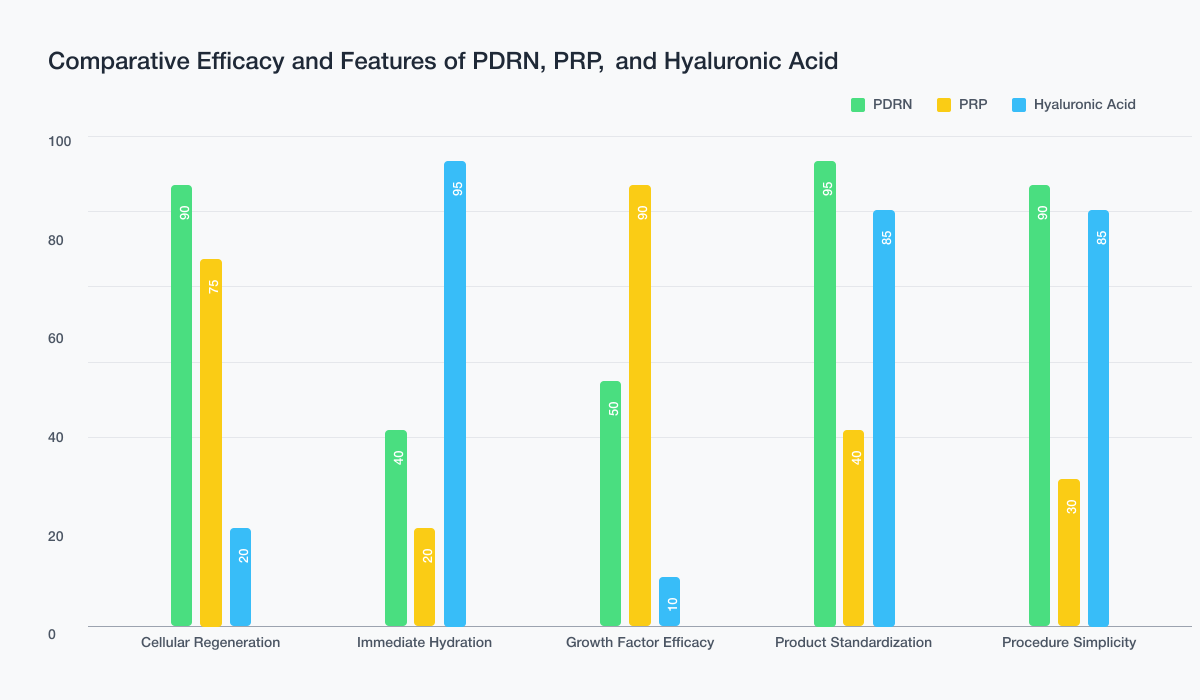
Navigating the landscape of modern skin rejuvenation treatments can feel complex, with various options promising remarkable results. Understanding the unique mechanisms behind popular aesthetic solutions like PDRN, Platelet-Rich Plasma (PRP), and Hyaluronic Acid (HA) is essential for making informed decisions. While all three can enhance skin quality, their approaches to cellular improvement differ significantly, positioning PDRN as a distinct biological signaler.
To clarify these distinctions, let's examine their core functions and applications:
| Feature | PDRN (Polydeoxyribonucleotide) | PRP (Platelet-Rich Plasma) | Hyaluronic Acid (HA) |
|---|---|---|---|
| Source Material | Purified salmon DNA | Patient's own blood | Synthetic, non-animal derived |
| Mechanism | Bioregenerator, signals cell repair, collagen/elastin production | Growth factors from platelets, stimulates regeneration | Humectant, draws and holds moisture, provides temporary plumpness |
| Primary Benefit | Long-term cellular regeneration, improved texture, elasticity, scar repair | Accelerated healing, tissue repair, collagen synthesis | Immediate hydration, volume, fine line reduction |
| Procedure | Topical application or micro-injections | Blood draw, centrifugation, injection | Topical application or dermal fillers (injection) |
| Key Differentiator | Standardized, no blood draw, direct DNA signaling | Autologous (from self), rich in diverse growth factors | Immediate hydration, no cellular signaling |
Unlike the Vampire Facial (PRP), which harnesses growth factors from your own blood, PDRN is a standardized, lab-purified product derived from salmon DNA. This means no blood draw is required, simplifying the procedure. PRP's strength lies in its diverse set of growth factors that stimulate healing and regeneration, while PDRN directly signals skin cells to produce more collagen and repair themselves at a fundamental level.
Comparing PDRN with Hyaluronic Acid (HA) further highlights its unique role. HA, a well-known humectant, excels at drawing moisture into the skin, providing immediate plumping and hydration. Its effects, however, are primarily temporary and focused on moisture retention. PDRN, by contrast, acts as a bioregenerator. It doesn't just hydrate; it sends biological signals to your cells, promoting long-term repair and the natural production of vital skin components like collagen and elastin. This leads to more gradual yet sustained improvements in skin texture, elasticity, and overall health.
While all three treatments can be effectively delivered via methods like microneedling, their biological functions remain distinct. PDRN actively signals for cellular repair, PRP supplies crucial growth factors, and HA provides immediate moisture and temporary volume. A randomized study even found PDRN to be comparable to PRP for improving wrinkles and pigmentation, underscoring its efficacy as a standalone treatment (Research Data). Choosing between them often depends on specific skin concerns and desired outcomes.
PDRN offers a distinct advantage as a powerful biological signaler, providing a pathway to genuine, lasting cellular regeneration.
Is PDRN Right For You? Ideal Candidates and Safety Profile

Deciding on a new skincare treatment involves understanding its suitability for your specific concerns and its overall safety. PDRN, with its regenerative properties, is a versatile option for a broad spectrum of individuals seeking enhanced skin vitality. It's particularly ideal for those beginning to notice early signs of aging, such as subtle fine lines, a slight loss of skin elasticity, or a general dullness in complexion.
Beyond age-related concerns, PDRN is also highly beneficial for individuals dealing with various textural irregularities. This includes the challenging task of improving the appearance of acne scars, refining uneven skin texture, or restoring radiance to sun-damaged skin. Its ability to stimulate cellular repair makes it an excellent choice for a comprehensive skin overhaul.
A significant advantage of PDRN is its impressive safety profile. The treatment is considered safe for most skin types, including those often labeled as sensitive or reactive. This high level of biocompatibility stems from the purified salmon DNA used, which is remarkably compatible with human DNA. As a result, allergic reactions are very rare, making it a well-tolerated option for many.
Note: While side effects are generally rare, the most common post-procedure experience is mild redness, similar to what one might encounter after microneedling or a light laser treatment. This typically subsides within a few hours to a day.
However, the efficacy and safety of any aesthetic treatment, including PDRN, are intrinsically linked to the expertise of the person administering it. Choosing an experienced, qualified provider is paramount. As many Reddit users in the 30PlusSkincare sub emphasize, opting for bargain treatments without verifying a practitioner's credentials can lead to undesirable outcomes (Reddit, 2024). A skilled professional will ensure proper technique, appropriate product application, and suitable aftercare, maximizing benefits while minimizing risks. Positive anecdotal reports frequently come from users with 'sensitive' and 'acne-prone' skin, highlighting PDRN's gentle yet effective nature when applied correctly.
PDRN is a safe and versatile option for skin regeneration, but its transformative potential is fully realized with a qualified professional.
Frequently Asked Questions
Understanding a new skincare treatment often comes with a host of questions. Here, we address the most common inquiries about PDRN, directly sourced from aesthetic clinic FAQs and user forums, to provide clear and concise answers.
Is salmon DNA skincare safe?
Yes, PDRN, derived from salmon DNA, is highly purified and processed to ensure excellent biocompatibility with human skin. This means it is very well-tolerated, and side effects are typically mild and temporary, such as slight redness or swelling at the application site, similar to other non-invasive procedures. Serious allergic reactions are exceedingly rare.
Can I just use a PDRN serum at home?
At-home PDRN serums can offer benefits like hydration, skin calming, and general support for skin health. However, for significant regenerative results, particularly those involving collagen stimulation and scar improvement, professional application methods like microneedling, mesotherapy, or specialized lasers are far more effective. These methods ensure deeper penetration and enhanced absorption of the PDRN, leading to more profound cellular repair. As Reddit users often inquire, professional delivery maximizes the viable impact of the treatment (Reddit, 2024).
Is PDRN the same as a Vampire Facial (PRP)?
No, PDRN is distinctly different from a Vampire Facial, also known as PRP (Platelet-Rich Plasma). PDRN utilizes purified polynucleotides extracted from salmon DNA. PRP, on the other hand, involves drawing a patient's own blood, processing it to concentrate platelets rich in growth factors, and then re-injecting it. The key difference is the source material and the absence of a blood draw with PDRN. This distinction is a frequently asked question across many aesthetic FAQs.
How quickly will I see results?
You may notice an immediate improvement in skin hydration and a subtle glow almost immediately after treatment. However, the more significant regenerative effects, such as increased collagen production and improved skin texture, develop gradually. These changes typically become visible over 2-4 weeks after your first session and continue to improve with subsequent treatments as your skin cells actively repair and rejuvenate.
Does it help with acne scars?
Yes, PDRN is highly effective in helping to improve the appearance of acne scars. Its core mechanism involves stimulating cellular repair and promoting the natural production of new collagen and elastin. Over time, this process helps to remodel and strengthen the skin's structure, leading to a smoother texture and a reduction in the depth and visibility of various types of acne scars. This is a common concern directly addressed in clinic FAQs.
Understanding these practical aspects of PDRN empowers individuals to make more informed decisions about their skin health journey.
We've explored PDRN, or 'salmon DNA,' delving deep into its scientific underpinnings and understanding why it's more than just a passing trend in the dynamic world of skincare. Its unique ability to engage with our skin at a cellular level positions it as a significant advancement in rejuvenation.
Here are the key takeaways from our comprehensive guide to PDRN:
- Science-backed Cellular Regeneration: PDRN, a powerful compound derived from salmon DNA, operates at a foundational cellular level. It actively stimulates the skin's inherent healing and repair mechanisms, fostering healthy regeneration and tissue development.
- Comprehensive Skin Rejuvenation: Its proven benefits extend beyond superficial improvements, effectively addressing critical anti-aging concerns such as fine lines, wrinkles, and loss of elasticity, while also showing remarkable efficacy in scar repair and promoting overall skin vitality.
- A Sustainable, Long-term Solution: Far from offering a temporary cosmetic fix, PDRN empowers the skin to rebuild and rejuvenate itself from within. This internal activation provides a lasting path to improved skin health and appearance, distinguishing it as a durable solution.
PDRN thus presents itself as a compelling ingredient, leveraging a powerful biological mechanism for genuine skin enhancement. Its unique approach offers a promising avenue for those seeking lasting improvement in their complexion.
Understanding PDRN's scientific merits is a crucial step towards making informed skincare decisions. If its potential aligns with your personal skin goals, consider consulting a skincare professional or dermatologist to determine how this advanced ingredient could integrate into a truly personalized and effective regimen tailored specifically for you.