Preventing Breakouts: AI's Proactive Guide to Clear Skin
Read about Preventing Breakouts: AI's Proactive Guide to Clear Skin on Cosmi Skin
Each year, the average person invests over $300 in skincare, often caught in a reactive cycle of trial and error. We apply treatments only after breakouts appear, waiting weeks or even months to see if a new product makes a difference. This approach is not just costly; it is a drain on time and confidence.
What if the secret to clear skin was not about reacting to problems, but preventing them altogether?
Enter Artificial Intelligence. By analyzing unique skin data with unprecedented precision, AI is fundamentally shifting the skincare paradigm. It detects blemishes before they surface and identifies personal triggers, moving beyond guesswork to offer a truly proactive, preventative path to skin health, a principle championed by platforms like CosmiSkin.
This article explores how AI technology works, its real-world applications in preventing acne, and provides a clear guide for transitioning from reactive treatments to a smarter, data-driven strategy.
The Problem with Traditional Acne Care
The conventional approach to acne care is primarily reactive, tackling blemishes only after they have appeared. This puts you in a constant state of catch-up rather than proactive prevention. The traditional path often leads to a costly and disheartening process of trial and error, with consumers frequently spending upwards of $300 annually on products that may prove ineffective for their unique skin (Consumer Skincare Insights, 2023). This financial drain is compounded by slow results; assessing a new product's efficacy typically requires a patience-testing 6-12 weeks, leading to frustration and inconsistent routines.
Moreover, the "one-size-fits-all" mentality of many conventional products falls short. They are designed for broad skin categories like "oily" or "dry," overlooking the complex interplay of intrinsic factors such as genetics and hormones with extrinsic influences like local climate and pollution (Dermatology Research, 2024). This generic approach fails to address the specific root causes of an individual's breakouts.
Note: Relying on broad formulations means missing the nuances of your unique skin profile, delaying true solutions.
Without a tailored strategy, achieving consistently clear skin becomes an elusive goal. The traditional approach to skincare is an inefficient, expensive, and reactive cycle that fails to proactively address the root causes of breakouts.
How AI Skin Analysis Works: From Selfie to Solution
AI transforms a simple photograph into a comprehensive diagnostic tool, creating a unique skin profile to deliver hyper-personalized skincare guidance. This process leverages sophisticated technology to understand your skin in unprecedented detail, providing a clear pathway to better skin health.

At its core, AI skin analysis relies on advanced computer vision algorithms. When you upload a high-resolution selfie, these algorithms—trained on millions of facial images—meticulously scan your skin to evaluate intricate features like wrinkles, texture, and pigmentation (L’Oréal’s SkinConsult AI). This visual inspection goes far beyond what the human eye can discern, detecting subtle issues like developing blemishes, pore congestion, and micro-changes in texture.
Beyond the visual, the AI integrates crucial contextual data. This includes user-provided details about lifestyle, diet, and stress levels, as well as real-time environmental data like the local UV index, humidity, and pollution exposure. This comprehensive data profile ensures a holistic understanding of both internal and external factors influencing your skin’s health.
Here is a simplified breakdown of the analytical journey:
- Image Capture & Scan: A high-resolution selfie is fed into the system for processing.
- In-depth Analysis: AI models use Machine Learning and Computer Vision to dissect the image, extracting features such as pore size, acne regions, and wrinkle depth.
- Score Calculation: The AI calculates severity scores for various skin concerns based on the identified features combined with user and environmental data.
- Personalized Recommendation: The system cross-references this unique skin profile against vast databases of ingredients and product formulations to recommend products and routines tailored to your specific concerns. For instance, Proven Skincare's 'Skin Genome Project' evaluates over 20,000 ingredients to create customized solutions.
Leveraging AI transforms skincare from a subjective, trial-and-error process into a precise and data-driven journey.
The Proactive Advantage: Preventing Breakouts Before They Start
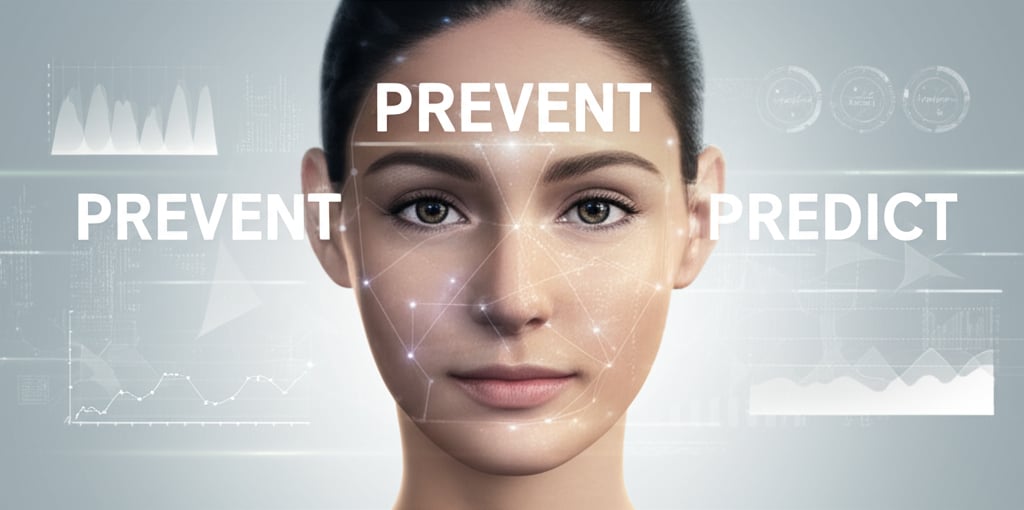
Traditional skincare is a reactive process, treating problems only after they surface. The fundamental shift AI brings is the move from reactive treatment to a proactive prevention strategy, empowering you to anticipate and prevent blemishes before they begin.
AI’s primary advantage lies in its ability to detect issues before they become visible. Advanced algorithms analyze subtle skin changes, identifying developing blemishes and pore congestion that have not yet fully surfaced. This early detection allows for intervention at the earliest stage, often preventing a full breakout.
Beyond detection, AI identifies your unique acne triggers. By correlating breakout frequency, location, and timing with lifestyle data—such as diet, stress, and environmental factors—the system can pinpoint what causes your skin to react. For example, if forehead breakouts consistently follow a stressful week, AI flags stress as a trigger, replacing guesswork with personalized insight.
AI’s precision also extends to tracking progress. Instead of subjectively wondering if a new routine is working, AI platforms create a detailed skin map documenting breakout frequency, healing speed, and textural changes. This data-driven feedback removes ambiguity. Users of AI acne analysis typically see improvements 40-60% faster than with traditional methods, demonstrating the efficiency of a targeted approach (Ada Skincare AI). This comprehensive methodology creates a truly preventative strategy, enabling preemptive measures like adjusting a product or modifying your diet before a breakout threatens.
AI transforms skincare from a reactive battle into a predictive defense against breakouts.
Dynamic Routines: Real-Time Adaptation to Your Skin's Needs
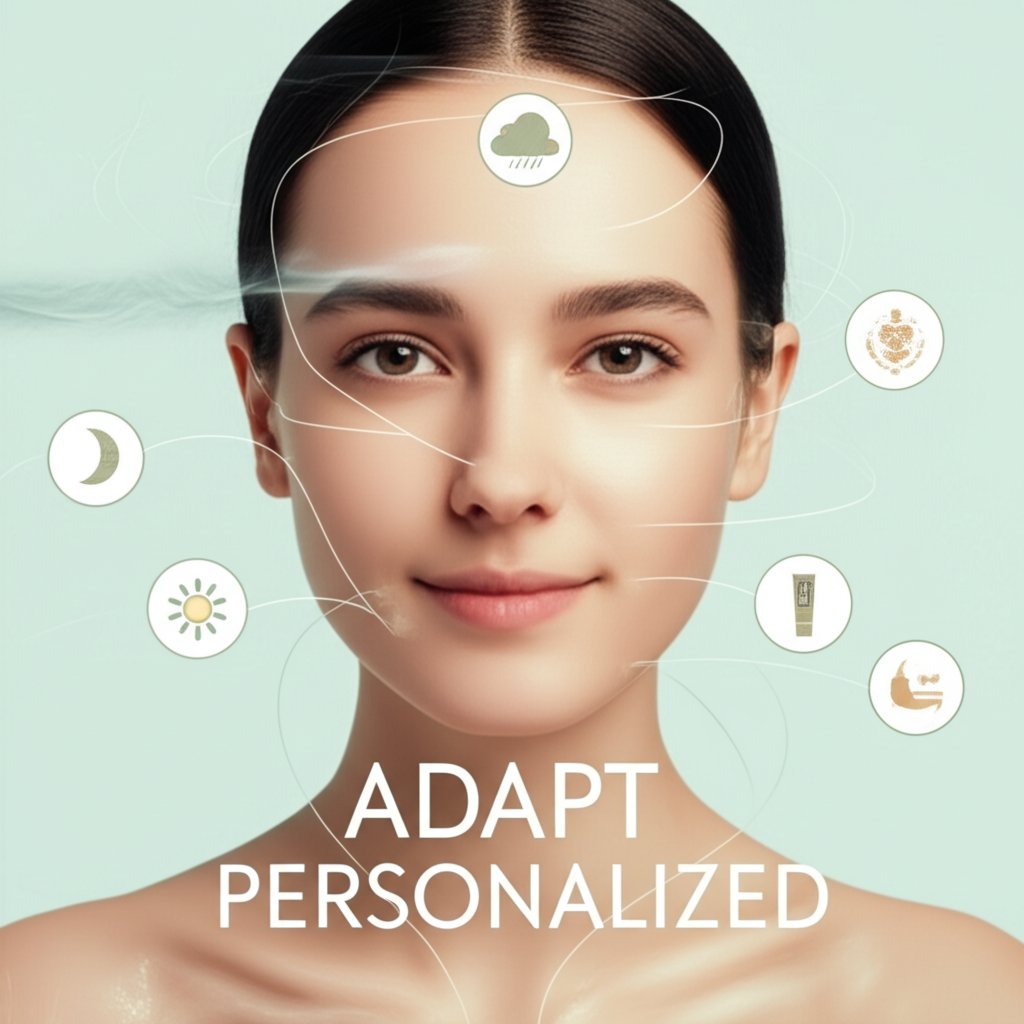
Unlike a fixed set of products, an AI-powered routine is a living system that intelligently adapts to the daily fluctuations of your skin and environment. This advanced approach moves beyond a simple initial assessment, understanding that your skin’s needs are constantly evolving.
Intelligent systems integrate real-time environmental data, adjusting recommendations based on factors like the daily UV index, local pollution levels, and ambient humidity. Platforms such as L’Oréal’s Perso and Shiseido’s Optune integrate this data, allowing AI to suggest products with higher SPF during periods of high UV exposure or recommend richer moisturizers when humidity drops (L’Oréal, 2024). This proactive adaptation ensures your skin is always optimally protected.
Beyond external factors, AI also accounts for your body’s internal rhythms, adapting routines to accommodate physiological changes like hormonal fluctuations or increased stress levels. The system recognizes these shifts and offers tailored adjustments to your routine, helping mitigate potential issues before they become visible.
The future of dynamic skincare is further enhanced by emerging wearable biosensors. These devices provide continuous data on skin parameters like hydration, pH balance, and transepidermal water loss (TEWL). By analyzing these metrics in real-time, AI can make even more granular and accurate adjustments to your regimen.
Crucially, an AI-driven system is designed for continuous improvement. It actively learns from your feedback and the observed results of its recommendations. Through regular updates, the system tracks changes and refines its suggestions over time, ensuring your routine becomes increasingly effective.
Note: This continuous learning loop means the AI doesn't just react; it anticipates and prevents future concerns by understanding patterns specific to your skin's responses.
The power of an AI-powered routine lies in its constant evolution, providing an unparalleled level of adaptive, proactive skincare that anticipates and responds to your skin's changing needs.
A Realistic Look at AI Skincare: Challenges and Considerations
While AI holds immense promise for personalized skincare, a balanced perspective is essential for its responsible adoption. Understanding its current limitations and ethical considerations builds trust and ensures users can harness its power effectively.
One primary concern is data privacy. AI platforms often require sensitive personal data, including facial images and health information. This necessitates choosing services with robust security measures and transparent privacy policies that adhere to global regulations like GDPR and HIPAA (GDPR, 2024). Users must feel confident that their data is protected from misuse or breaches.
Another significant challenge is algorithmic bias. Many AI models in dermatology are trained on datasets lacking diverse skin tones, which can lead to less accurate analyses for individuals with darker complexions (Journal of Investigative Dermatology, 2023). For example, an AI trained mainly on lighter skin might misinterpret hyperpigmentation on darker skin. Addressing this requires conscious efforts to diversify training datasets to ensure equity.
It is also crucial to avoid over-reliance on technology. AI is a powerful tool to augment skincare routines, but it should not replace the diagnosis and advice of a professional dermatologist, especially for severe or chronic conditions. Leading dermatology academies emphasize AI as a supportive tool for clinicians, not a substitute for their expertise (American Academy of Dermatology, 2023).
Note: AI is designed to complement professional medical advice, enhancing early detection and personalized care, but it does not replace a comprehensive clinical examination by a qualified dermatologist.
Finally, the "black-box" nature of some AI models can be a hurdle. The difficulty in understanding the decision-making process behind a recommendation can be a barrier to trust. Future developments in explainable AI (XAI) are vital to bridge this gap.
Responsible adoption requires balancing AI's potential with transparent data privacy policies, conscious efforts to eliminate algorithmic bias, and its use as a supplement to professional expertise.
The Business of Clear Skin: AI's Impact on the Industry
The global skincare market is poised to reach $194.05 billion by 2032, with its growth increasingly propelled by the strategic integration of Artificial Intelligence (Fortune Business Insights). AI is now a vital engine driving innovation, enhancing customer engagement, and reshaping operational strategies across the industry.
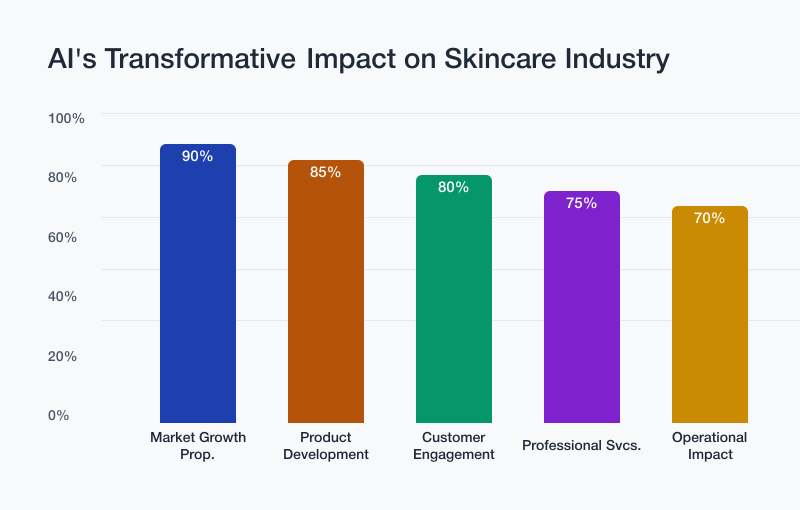
For beauty brands, AI accelerates product development. By analyzing vast datasets of user preferences and skin concerns, AI identifies unmet needs with high precision. Brands like Neutrogena, with its Skin360 app, and L'Oréal leverage AI to develop targeted products that resonate with consumer demands, reducing time-to-market and increasing success rates.
In retail and e-commerce, AI elevates the customer experience. Virtual try-on tools, dynamic recommendation engines, and AI chatbots provide personalized engagement that boosts conversion rates and brand loyalty (L'Oréal, 2023).
Beyond consumer applications, AI is transforming professional skincare. Spas and dermatology clinics are adopting AI for faster, more precise consultations. AI-powered telemedicine expands access to expert care, allowing remote consultations and progress monitoring. Furthermore, AI's role in clinical trials is revolutionary, optimizing patient matching and increasing research efficiency for new skincare solutions (ClinicalTrials.gov, 2024).
Note: Strategically integrating AI differentiates brands and service providers in a competitive market, moving beyond generic offerings to deliver truly personalized and effective solutions.
For brands and professionals, embracing AI is paramount for future growth, driving innovation in product development, personalizing the customer experience, and creating new service models.
Frequently Asked Questions (FAQs)
As with any new technology, questions about AI skincare are common. Here, we address frequent inquiries to help you navigate this innovative approach.
Will AI replace dermatologists?
No, AI is designed to enhance, not replace, the expertise of dermatologists. It serves as a powerful analytical tool that supports clinical practice, processing vast amounts of data to assist dermatologists in making more informed decisions and creating personalized treatment plans (Journal of AI in Medicine, 2023). AI Cosmetologist tools empower both professionals and individuals with data-driven guidance.
Can AI detect skin conditions like dryness or acne?
Yes. Advanced AI models leverage image analysis to identify and assess various skin conditions, including dryness, acne, redness, and subtle textural changes. By analyzing high-resolution images, AI can detect patterns and indicators that might be less obvious to the naked eye, enabling highly personalized recommendations based on an objective skin report.
Are there risks associated with AI skincare?
While AI offers significant benefits, potential risks include data privacy and algorithmic bias.
- Data Privacy: Personal health data, including skin imagery, must be handled with care. Reputable AI platforms adhere to strict data protection regulations like HIPAA or GDPR to ensure your information remains secure.
- Algorithmic Bias: If an AI model's training data is not diverse, it may perform less accurately for certain skin tones. Continuous development with inclusive datasets is crucial to minimize these biases.
Caution: Always review the data privacy policies of any AI skincare platform you use to ensure your personal information is protected.
Understanding these considerations is key to responsibly adopting AI, empowering you with a smarter, data-driven path to clear skin.
The traditional cycle of treating breakouts after they appear has long been a source of frustration. As we've explored, Artificial Intelligence offers a transformative shift, moving skincare from a reactive struggle to a proactive, data-driven strategy for lasting clarity.
By leveraging advanced algorithms and precise skin analysis, AI provides an unprecedented understanding of individual skin health, identifying potential issues before they become visible and tailoring solutions to your unique needs. This paradigm shift means embracing a future where guesswork is replaced by informed precision.
Here are the key takeaways from our exploration of AI's role in preventing breakouts:
- Proactive Prevention: AI empowers you to address skin concerns before they manifest, breaking the cycle of reactive treatment.
- Personalized Insights: Advanced analysis uncovers individual triggers and provides data-driven recommendations, ensuring your routine is truly unique.
- Dynamic Adaptation: AI-powered routines evolve with your skin, offering real-time adjustments to maintain optimal health and prevent future issues.
The integration of AI into skincare marks a significant step forward, offering powerful tools and a collaborative approach to achieving your skin goals. To embark on this journey toward consistently clear skin, consider exploring AI-powered solutions. Embrace the intelligence that can transform your daily regimen into a highly effective, preventative practice.
Tags
Related Articles
From Acne to Radiance: Proven AI Solutions for Clear Skin
Beyond Trial & Error: AI Elevates Skincare Spending