Sunscreen Filters: Mineral vs. Chemical Explained
Read about Sunscreen Filters: Mineral vs. Chemical Explained on Cosmi Skin
Your Shield Against the Sun: Demystifying Mineral and Chemical UV Filters
Embark on an enlightening journey through the realm of sun protection with our definitive guide distinguishing mineral from chemical filters. Uncover their unique mechanisms, distinct advantages, and discover how to pinpoint the optimal sun defense tailored for your vibrant complexion, informed by insightful industry perspectives.
TL;DR: Sunscreen Filters Summarized
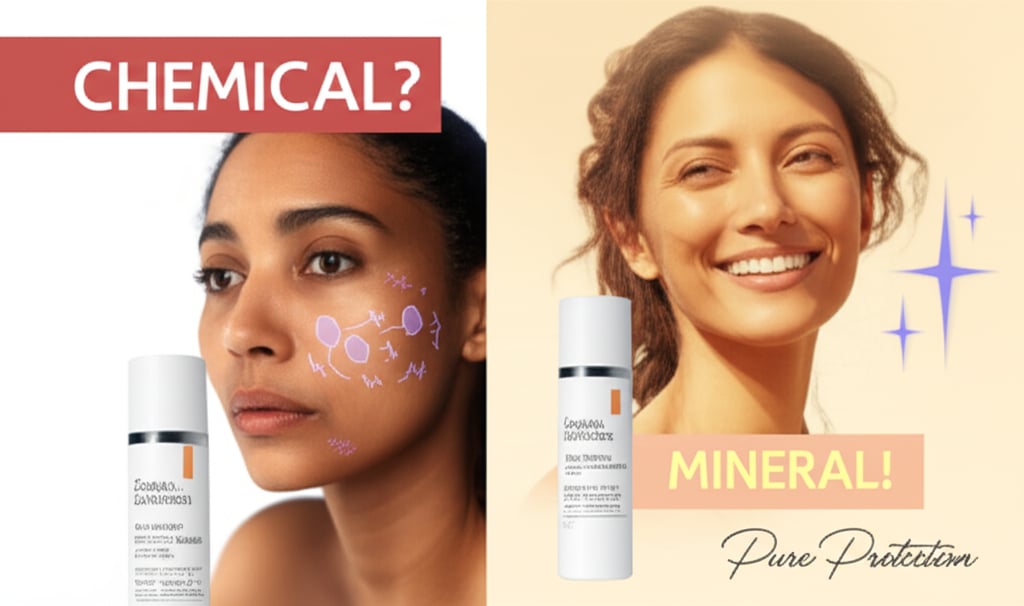
- Mineral sunscreens form a physical veil on the skin's surface, deflecting and absorbing ultraviolet radiation. They are often the preferred choice for sensitive skin types and are generally regarded as safer for aquatic environments.
- Chemical sunscreens penetrate the skin, where they transform UV rays into harmless heat. These formulations typically boast sheerer textures and offer broad-spectrum protection with an invisible finish.
- Choosing the ideal sunscreen hinges on a blend of personal factors: your unique skin profile, daily habits, and environmental considerations.
Unpacking Sunscreen Filters: A Vital Choice for Skin Vitality
Safeguarding your skin from the pervasive assault of ultraviolet (UV) radiation is an undeniable imperative for sustaining its long-term health and preserving its youthful radiance. The sun unleashes two primary classes of UV rays, each with distinct impacts on your dermal landscape: UVA and UVB.
- UVB rays: These are the notorious culprits behind sunburn, directly inflicting damage upon cellular DNA, thereby markedly escalating the probability of developing skin cancer.
- UVA rays: Characterized by their longer wavelengths, UVA rays infiltrate deeper into the skin's layers. They are significant contributors to accelerated skin aging, manifesting as wrinkles, fine lines, and irregular skin tone, alongside their documented role in skin cancer pathogenesis.
Without an unyielding shield, the relentless accumulation of exposure to both UVA and UVB rays can precipitate substantial damage, compromising both the aesthetic appeal and intrinsic health of your skin. A thorough grasp of the operational principles behind various sunscreen filters – specifically mineral and chemical types – transcends mere protection. It empowers you to select a bespoke defense that precisely aligns with your skin's individual requirements and aspirations. An truly astute skincare regimen, echoing the precision of expertly crafted routines, is founded upon choosing products that harmonize with your skin's particular sensitivities and overarching beauty objectives.
Key Takeaway: The Essence of Sunscreen Filters
Selecting the appropriate sunscreen filter is paramount for securing comprehensive protection against both UVA and UVB radiation, serving as a direct determinant of skin health, the pace of aging, and defense against cancerous transformations.
Next Up: A Deep Dive into Mineral Sunscreens
Our next segment will illuminate the world of mineral sunscreens, dissecting their unique protective mechanisms and inherent benefits for your skin.
Mineral Sunscreens: Your Skin's Immovable Fortress
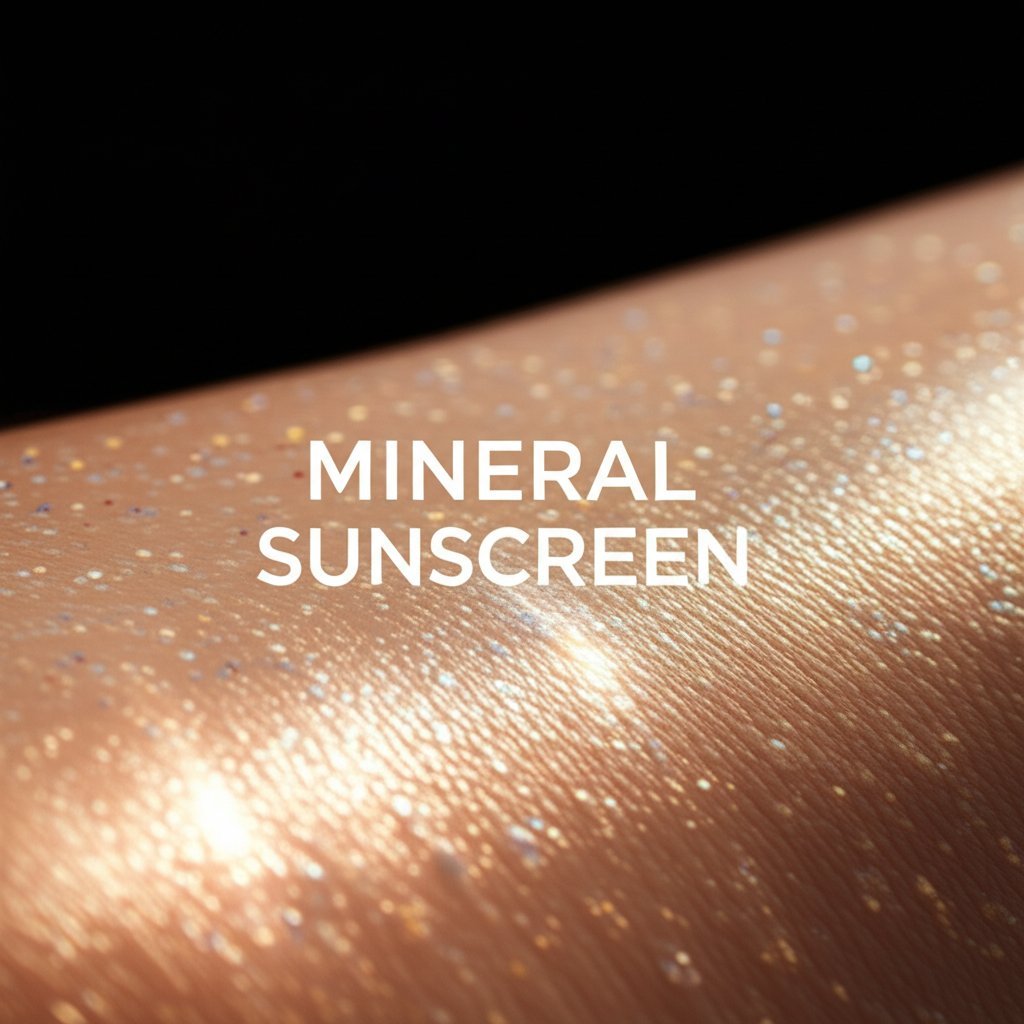
Mineral sunscreens, frequently recognized as physical blockers, leverage naturally derived minerals to forge an impenetrable shield upon your skin's outermost layer. These formulations prominently feature two principal active constituents:
- Zinc Oxide: A formidable, broad-spectrum guardian, this mineral offers robust protection across the entire UVA and UVB spectrum.
- Titanium Dioxide: This component primarily targets UVB rays and the shorter segment of UVA radiation, acting as a reliable line of defense.
In bygone eras, it was commonly posited that these minerals exclusively reflected UV radiation away from the skin. However, contemporary scientific revelations clarify that their primary mode of action involves absorbing UV light and subsequently transmuting it into benign heat, a process akin to their chemical counterparts, while still contributing a minor degree of reflection. This sophisticated dual functionality renders them exceptionally potent protectors for your skin.
Enlightened Perspective: While historically celebrated as mere reflective mirrors for UV, cutting-edge research confirms that mineral filters predominantly absorb ultraviolet radiation, complemented by a modest scattering effect, effectively neutralizing its detrimental energy.
Advantages and Considerations of Mineral Sunscreens
| Aspect | Description |
|---|---|
| Mechanism of Action | Establishes a protective physical layer on the skin's surface; primarily absorbs UV light, with a secondary role in scattering it. |
| Protective Scope | Delivers comprehensive broad-spectrum defense (especially zinc oxide); becomes effective instantly upon application, acting as an immediate shield. |
| Skin Compatibility | Exceptionally well-suited for delicate complexions and those prone to breakouts or irritation, given that their active components are less prone to skin penetration. |
| Ecological Impact | Generally perceived as more ocean-friendly, as zinc oxide and titanium dioxide do not appear to cause detrimental effects to precious marine ecosystems. |
| Aesthetic Qualities | Can possess a thicker consistency, occasionally resulting in a visible whitish tint, though advanced micronized formulas have significantly mitigated this. May not seamlessly vanish on all skin tones. |
| Formulation Challenges | Might convey a denser feel or a less silken glide compared to alternative chemical options. |
For a multitude of individuals, particularly those whose skin readily takes offense, mineral sunscreens emerge as an indispensable staple. Their inherently gentle composition affords effective soothing and steadfast protection, averting undesirable skin reactions. Sophisticated online insights can assist in discerning whether this class of sun protection perfectly harmonizes with your skin's distinct requirements, especially if your objective is to alleviate redness or uphold a clarified skin appearance.
Key Takeaway: Delving into Mineral Sunscreens
Mineral sunscreens offer immediate, wide-ranging protection by forming a surface barrier that primarily absorbs UV light, positioning them as an outstanding, mild choice for reactive and sensitive skin types.
Next Up: Decoding Chemical Sunscreens
We now pivot to explore chemical sunscreens, dissecting their inventive strategy for UV protection and the distinctive attributes that set them apart.
Chemical Sunscreens: The Power of Absorption
Chemical sunscreens operate through a distinct, yet equally formidable, mechanism. Rather than erecting a physical impediment, these sophisticated formulations are engineered to permeate the skin. Once assimilated, their active constituents engage in a precise chemical transformation, converting hazardous UV radiation into innocuous heat, which is then dissipated from the dermal layers.
Prominent active components, sanctioned by authoritative regulatory bodies, encompass:
- Avobenzone: Renowned for its exceptional defense against the longer wavelengths of UVA.
- Oxybenzone: Historically provided broad-spectrum protection, though its usage has seen a decline due to emerging concerns regarding environmental impact and systemic absorption.
- Homosalate, Octisalate, Octocrylene: These compounds primarily serve to guard against damaging UVB rays.
There have been ongoing deliberations concerning the systemic uptake of certain chemical filters into the bloodstream. While research confirms this phenomenon, current scientific consensus does not establish definitive harm to humans at typical levels of application. Nevertheless, for those who prioritize minimizing any form of internal absorption, this aspect remains a legitimate consideration.
Advantages and Considerations of Chemical Sunscreens
| Aspect | Description |
|---|---|
| Mechanism of Action | Absorbs into the skin, where it biochemically transforms UV radiation into heat, which is subsequently released. |
| Protective Scope | Typically delivers potent broad-spectrum defense, notably bolstered by newer, advanced formulations. |
| Aesthetic Qualities | Characteristically lighter in texture, exuding an elegant feel, and integrating flawlessly without leaving a white residue, enhancing its cosmetic appeal. |
| Application Experience | Spreads effortlessly and is often favored for everyday wear, particularly as an under-makeup primer. |
| Skin Compatibility | Has the potential to trigger irritation or allergic reactions in certain individuals, particularly those with markedly sensitive skin profiles. |
| Ecological Impact | Specific compounds, such as oxybenzone and octinoxate, have been implicated in potential damage to coral ecosystems and marine organisms, prompting legislative prohibitions in various locales. |
| Absorption Concerns | Certain active constituents can migrate into the bloodstream, a subject that continues to spur active scientific investigation and regulatory scrutiny. |
Contemporary chemical sunscreens, especially those harnessing innovative filters available in some international markets (such as Tinosorb or Mexoryl), are capable of delivering superior broad-spectrum UVA protection without the heavy sensation. These breakthroughs underscore the dynamic evolution of dermatological science. While the issues of skin absorption and environmental footprint remain arenas of vigorous research, the sheer convenience and imperceptible finish of chemical sunscreens render them a favored option for many, empowering them to maintain a consistently safeguarded and luminous skin tone.
Key Takeaway: Unveiling Chemical Sunscreens
Chemical sunscreens operate by internalizing UV radiation within the skin, providing cosmetically pleasing, transparent finishes. However, it's prudent to acknowledge concerns regarding skin absorption and environmental implications.
Next Up: An In-Depth Comparison
Our subsequent section will feature a direct side-by-side comparison, designed to clarify the fundamental distinctions and streamline your decision-making process.
Mineral vs. Chemical: A Direct Face-Off
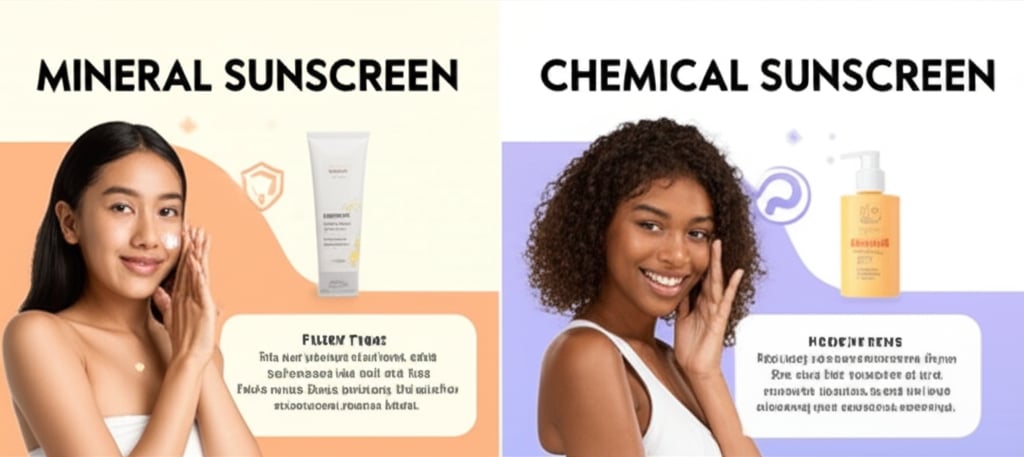
Image: Visual representation comparing the characteristics of mineral and chemical sunscreens.
The deliberation between mineral and chemical sunscreens frequently culminates in a decision shaped by individual predilections, skin specificities, and pressing concerns. Presented below is a comparative synopsis crafted to assist you in weighing the respective merits:
| Feature | Mineral Sunscreen | Chemical Sunscreen |
|---|---|---|
| Primary Components | Zinc Oxide, Titanium Dioxide | Avobenzone, Oxybenzone, Octinoxate, Homosalate, etc. |
| Mechanism of Protection | Resides on the skin's surface, predominantly absorbing UV, with some scattering and reflection. | Permeates the skin, transforming UV energy into heat, which is then released. |
| Effectiveness Timeline | Delivers immediate protective benefits upon initial application. | Requires approximately 15-20 minutes post-application to fully activate. |
| Dermal Absorption | Negligible to non-existent (particles largely remain superficial). | Active ingredients are absorbed into the systemic bloodstream. |
| Cosmetic Aesthetics | Can impart a whitish residue and may possess a denser texture (though advanced formulations have minimized this). | Typically sheer, feather-light, and leaves no white cast; often favored as a base under cosmetics. |
| Skin Reactivity | Generally favored for sensitive complexions, blemish-prone skin, and pediatric use; considered less irritating. | Potentially capable of inducing irritation or allergic responses in certain sensitive individuals. |
| Aquatic Safety | Broadly regarded as reef-compatible. | Specific constituents (e.g., oxybenzone) raise environmental concerns for marine ecosystems. |
| Reapplication Frequency | Advised every 2 hours, or following aquatic activities/perspiration. | Advised every 2 hours, or following aquatic activities/perspiration. |
Both categories of sunscreens afford reliable protection when employed judiciously. The designation of "best" is not universal; it is inherently bespoke. For instance, individuals with exceptionally delicate or reactive skin might discover that mineral alternatives contribute to a calmer complexion, while those for whom a completely imperceptible finish is paramount for daily wear may gravitate towards chemical formulations. Intelligent product suggestions integrate these subtleties, ensuring your sun protection aligns with your broader skincare journey to achieve your desired outcomes, whether that involves diminishing dark spots or sustaining a hydrated luminosity.
Key Takeaway: The Core Differences in Sunscreen Filters
The fundamental divergence lies in their interaction with UV rays and the skin: mineral filters establish a surface barrier, whereas chemical filters absorb into the skin to neutralize UV, each presenting distinct cosmetic and dermal compatibility profiles.
Next Up: Tailoring Your Sunscreen Choice
Now, we will furnish guidance on selecting the optimal sunscreen filter, precisely customized for your unique skin attributes.
Selecting the Ideal Sunscreen for Your Individual Skin Profile
The quest for the quintessential sunscreen is far from a universally applicable quest. It represents an intensely individualized selection, swayed by your inherent skin characteristics, specific dermatological concerns, and even your daily routines. Expert guidance is available to help you navigate this choice with data-informed precision.
Here is a structured approach to guide your decision-making:
Evaluate Your Skin's Propensity for Sensitivity:
- Should your skin be prone to reactions, exhibit redness, or easily react to novel products, fragrance-free mineral sunscreens (featuring zinc oxide and titanium dioxide) frequently stand as the safest proposition. Numerous individuals with delicate skin or conditions such as rosacea report mineral selections to be less provocative. They can also be advantageous for those aiming to combat acne, given their reduced likelihood of pore occlusion.
- Consideration: If you possess specific sensitivities, as certain online insights suggest, seek formulations devoid of ingredients like cyclopentasiloxane or centella.
Harmonize with Your Skin Type and Primary Concerns:
- Oily/Acne-Prone Skin: The paramount requirement here is for lightweight, non-comedogenic formulas. Many mineral sunscreens can impart a desirable matte finish, adept at regulating oil. Additionally, several contemporary chemical and hybrid sunscreens offer feathery textures that do not exacerbate oiliness.
- Dry/Dehydrated Skin: Prioritize sunscreens enriched with supplementary hydrating components. Well-formulated mineral sunscreens can avoid dryness, and many chemical varieties often provide a silkier, more emollient sensation.
- Hyperpigmentation (Discoloration): Tinted mineral sunscreens, which often incorporate iron oxides alongside zinc oxide and titanium dioxide, can furnish an added stratum of defense against visible light—a known contributor to dark spots. This extra protection can assist in reducing existing pigmentation with greater efficacy.
Align with Your Lifestyle and Aesthetic Preferences:
- Active Lifestyle/Outdoor Pursuits: Water-resistant formulas are indispensable. Both mineral and chemical options are readily accessible, but diligent application and frequent reapplication remain non-negotiable.
- Everyday Wear Beneath Makeup: If an unblemished, undetectable finish is paramount, many chemical sunscreens excel. Nevertheless, advancements in mineral sunscreen technology have yielded increasingly transparent, lightweight alternatives that merge seamlessly, cultivating a luminous foundation.
Weigh Environmental and Safety Imperatives:
- If marine conservation or ecological footprint is a paramount concern, mineral sunscreens are generally favored due to a lesser known impact on aquatic ecosystems. Regarding specific chemical ingredients such as oxybenzone, regulatory bodies have voiced reservations.
Sophisticated platforms transcend mere generalized advice. By scrutinizing your skin's distinctive blueprint, monitoring its evolution, and delivering expert perspectives, we provide tailored sunscreen endorsements that integrate effortlessly into your individualized regimen. We endeavor to dispel uncertainty, ensuring your chosen product not only protects but also amplifies your skin's radiant vitality.
Key Takeaway: The Art of Sunscreen Selection
Choosing your optimal sunscreen necessitates a personalized methodology, meticulously weighing your skin type, sensitivities, daily habits, and environmental considerations to secure both superior protection and cosmetic elegance.
Next Up: Embracing Holistic Sun Protection
Lastly, let's investigate how sunscreen integrates into a comprehensive paradigm for sun protection and overarching skin health.
Beyond the Bottle: A Holistic Approach to Luminous Skin Protection

While the act of choosing the correct sunscreen is undeniably a pivotal stride, it is crucial to recognize that it represents but one facet within a multifaceted sun protection strategy. Cultivating truly vibrant and safeguarded skin demands a nuanced, encompassing approach, weaving several sagacious habits into the fabric of your daily existence. Sunscreen functions as a potent confederate, yet its efficacy reaches its zenith when harmonized with other protective methodologies.
Cornerstone Elements for an All-Encompassing Sun Shield:
- Embrace the Shade: This remains one of the most straightforward yet profoundly effective tactics for diminishing UV exposure. Strategize outdoor activities to coincide with periods when the sun's emanations are less intense, typically before 10 AM and after 4 PM.
- Don Protective Attire: Make a judicious investment in headwear, eyewear, and apparel explicitly engineered with a UPF (Ultraviolet Protection Factor). Garments featuring long sleeves and trousers, even if lightweight, can furnish substantial protection, frequently surpassing sunscreen alone for prolonged outdoor durations.
- Apply Sunscreen Generously and Reapply Diligently: Irrespective of the sunscreen type, it is imperative to apply it lavishly – approximately a shot glass volume for the body and a coin-sized portion for the face – and to renew its application every two hours, or with greater frequency subsequent to swimming or vigorous perspiration. This constitutes a pivotal action to elevate your sun protection endeavors.
- Circumvent Peak Sun Hours: Actively curtailing direct solar exposure during the zenith of UV intensity significantly mitigates risk.
A holistic perspective on skincare inherently encompasses every aspect, extending beyond mere product endorsements to embrace a complete, customized blueprint for peak skin well-being. Intelligent technologies not only aid in pinpointing the most suitable sunscreen but also guide its integration into an overarching routine, providing timely reminders and expert counsel for unwavering protection. Through detailed progress reports, you can meticulously monitor how your dedicated efforts translate into discernible enhancements, observing your skin become noticeably clearer, more hydrated, and genuinely radiant.
This comprehensive framework ensures that your engagement with sun exposure is not merely reactive but proactively constructs resilience and nurtures enduring skin vitality. Embracing these prudent practices, supported by insights from industry sources, empowers you to confidently relish the outdoors while preserving the health and aesthetic allure of your skin.
FAQ
Which sunscreen formulation is most advisable for individuals with sensitive skin?
For skin that is prone to sensitivity, mineral sunscreens, typically formulated with zinc oxide and titanium dioxide, are generally the preferred recommendation. Their mode of action involves remaining on the skin's surface, which significantly reduces the likelihood of inducing irritation or allergic responses. Many users report that fragrance-free mineral options are particularly gentle yet highly effective.
Is there a legitimate concern regarding chemical sunscreen ingredients being absorbed into the bloodstream?
While scientific investigations have confirmed the systemic absorption of certain chemical sunscreen compounds into the bloodstream, current research does not definitively establish adverse health effects in humans at standard usage concentrations. Regulatory bodies maintain continuous oversight and review of emerging data, but the consensus among experts is that the benefits derived from sun protection substantially outweigh any theoretical risks associated with chemical absorption.
What is the actual difference in protection offered by SPF 30 versus SPF 50?
There is indeed a difference, although it is less pronounced than commonly assumed. SPF 15 effectively blocks roughly 93% of UVB radiation, SPF 30 extends this to approximately 97%, and SPF 50 provides around 98% blockage. Higher SPF values do not offer dramatically superior protection and can sometimes foster a false sense of security, potentially leading to insufficient reapplication. The most critical factors are applying an adequate quantity of sunscreen and ensuring frequent reapplication.
Can mineral sunscreens truly be categorized as 'reef-safe'?
Mineral sunscreens, especially those utilizing non-nanoparticle zinc oxide and titanium dioxide, are largely considered more environmentally benign for coral reefs compared to chemical sunscreens containing ingredients like oxybenzone and octinoxate, which have been implicated in coral degradation. However, the comprehensive ecological impact of all sunscreen types on marine ecosystems remains an intricate and active area of scientific inquiry. Opting for mineral formulations often reflects a proactive commitment to environmental preservation.
Is it possible to obtain sufficient Vitamin D if sunscreen is applied daily?
Absolutely, it is entirely feasible to maintain adequate Vitamin D levels even with consistent daily sunscreen use. The majority of individuals still encounter sufficient incidental sunlight, and the degree of Vitamin D synthesis inhibited by regular sunscreen application is minimal. For those expressing concern about potential deficiency, dietary sources, such as fortified foods and fatty fish, along with supplements, present effective and safe alternatives to unprotected sun exposure.