Beyond the Hype: How Data-Driven Skincare Delivers Measurable Results
Read about Beyond the Hype: How Data-Driven Skincare Delivers Measurable Results on Cosmi Skin
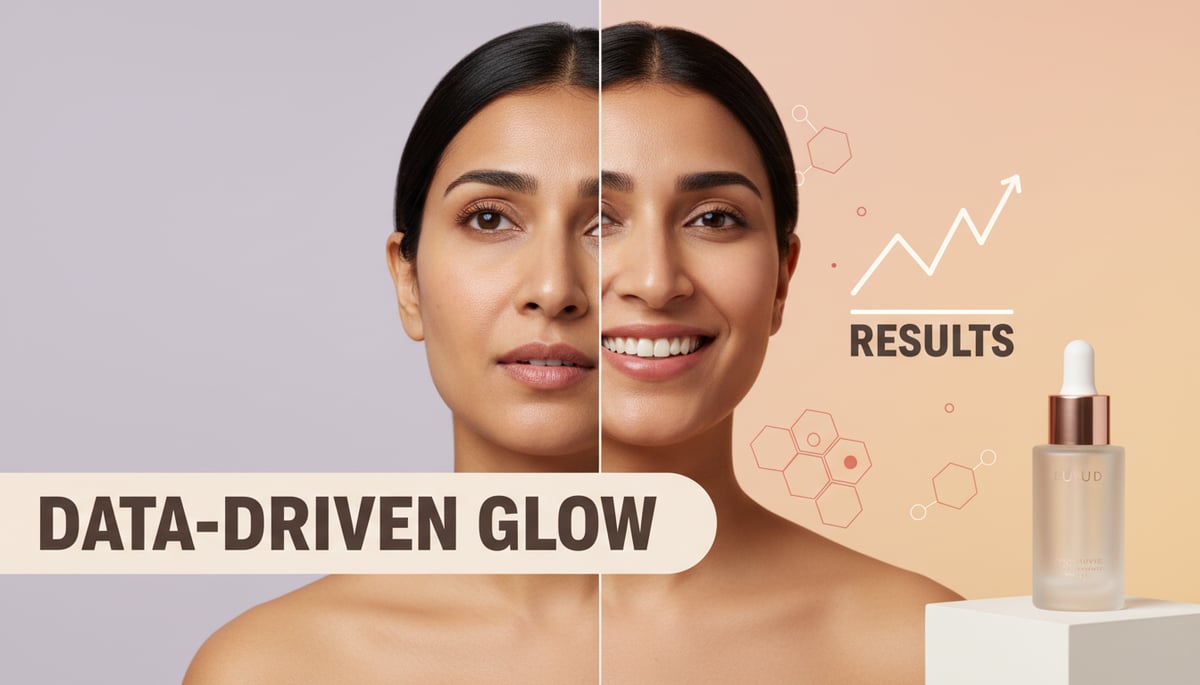
Remember a time when skincare felt like a fancy lottery? Throwing money at serums based on a magazine ad or your aunt's "secret trick." It was a realm of pure guesswork, with most of us having no real clue what our skin actually needed. This led to endless trial and error, often wondering why nothing truly worked. It was a gamble every single time.
But the game has fundamentally changed. We've moved past anecdotes to scientific precision, thanks to smart technology – specifically, the AI-powered skin analysis that's rapidly reshaping the industry. Now, we finally know. No more "try this, hope for that"; just objective data revealing your skin's true needs.
This transformation is profound. This isn't about empty promises or fleeting trends; it’s about replacing guesswork with measurable results and undeniable proof. We're going to explore how this transformation occurs, what it means for your daily routine, and why it's far more than just another industry fad.
How AI Objectively Analyzes Your Skin

Let's be clear about AI-powered skin analysis. You might be thinking, "another gimmick." We understand that sentiment, having seen countless products and fleeting fads. But this technology is profoundly sophisticated, capable of discerning nuances your mirror, and even a trained eye, totally miss.
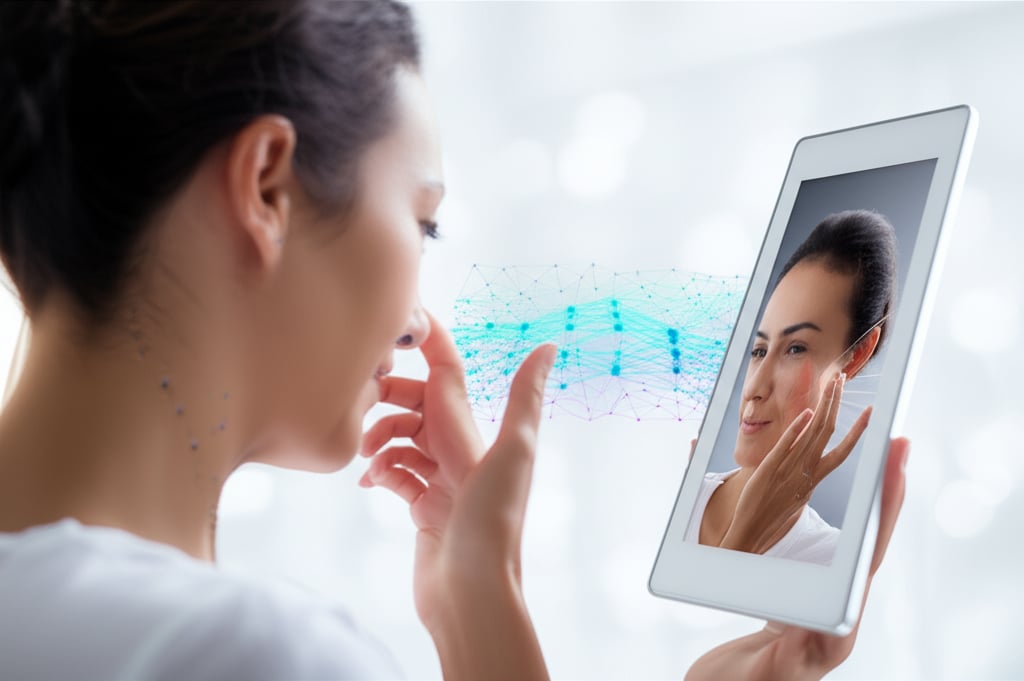
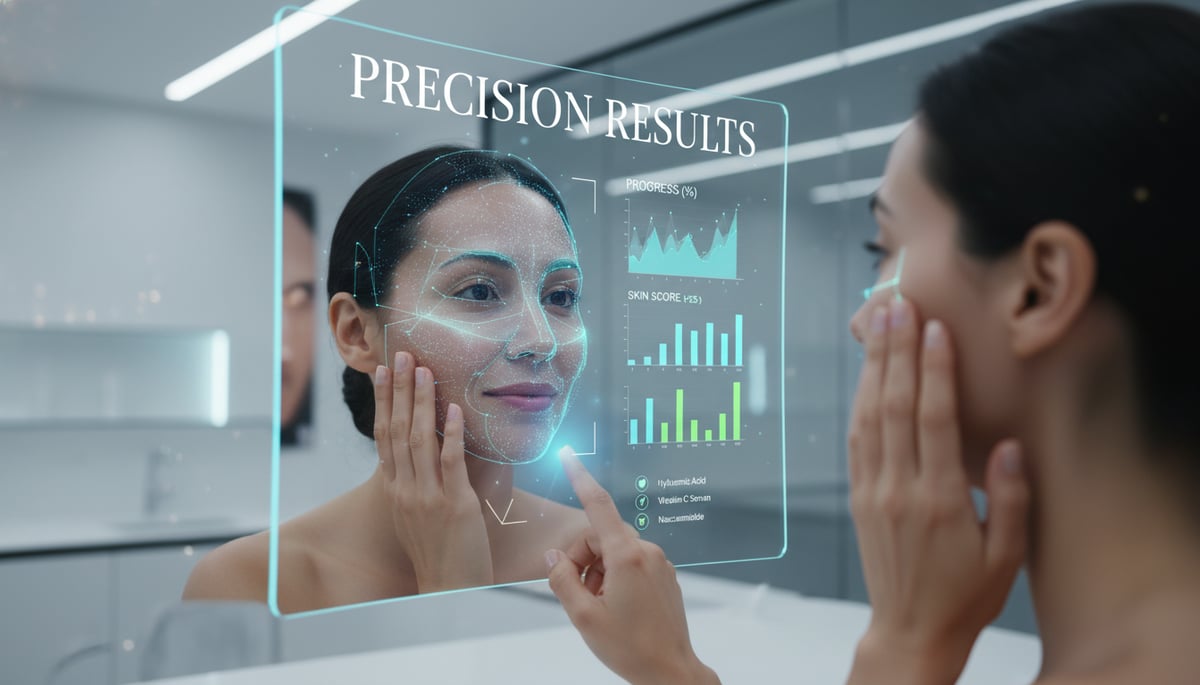
It operates without guesswork. This advanced tech utilizes sophisticated imaging and machine learning algorithms to deconstruct your skin's condition with unprecedented granularity. It doesn't just look for wrinkles; it measures their depth. It meticulously checks texture, hydration levels, pigmentation spots, and pore size—all simultaneously. It's akin to having a high-powered microscope applied across your entire complexion, generating a wealth of data.
Platforms like Haut.AI (2024) are fed millions of diverse facial images, enabling them to learn and spot intricate patterns. Thanks to these extensive training datasets, they can evaluate over 150 unique facial biomarkers. Think about that: one hundred and fifty. This isn't simply classifying "oily" or "dry"; it's a granular, multi-dimensional assessment, which is why it's so remarkably effective.
Crucially, it removes personal bias from the equation. No more squinting in front of the mirror, attempting to gauge if that dark spot is getting lighter (it's never truly clear, is it?). This process eliminates all subjectivity and the "maybe it's better?" guesswork. It provides a consistent, objective baseline of irrefutable facts, allowing you to track real changes, not just perceived ones. This technology can even identify certain conditions, with deep learning models demonstrating a 68% agreement rate with dermatologists on acne severity – a significant leap beyond anecdotal advice.
This isn't about guesswork; it's about cold, hard data finally getting it right.
From Data Points to a Dynamic Skincare Routine

So, your face is scanned, generating comprehensive, objective data. Now what? This is where the true transformation begins. That data doesn't just sit there; it's activated, cross-referenced against vast databases. We're talking thousands of ingredients, tens of thousands of products, and decades of dermatological research. Proven Skincare's 'Skin Genome Project' (2024), for instance, evaluates over 20,000 ingredients and 100,000 products. An immense undertaking.
This means your recommendations aren't generic, ineffective suggestions. Instead, they are genuinely hyper-personalized. The AI considers your skin type, sometimes your genetics, and critically, external factors like your environment, UV index, pollution levels, humidity, and even your lifestyle. L’Oréal’s Perso device (2024) actually pulls in real-time weather and UV data, demonstrating its exceptionally intelligent approach.
But here's the fundamental paradigm shift: this routine isn't set in stone. Unlike static, outdated approaches, your skin continuously changes due to hormonal shifts, seasonal variations, and your progress. AI systems adapt, recommending adjustments. Perhaps you're experiencing winter dryness, prompting an increase in hyaluronic acid. Or your acne is clearing, shifting the focus to scar reduction. It's a dynamic, living strategy, often referred to as a feedback loop. This responsiveness explains why 70% of beauty consumers now prefer AI-driven personalization; they're tired of wasting money on products that stop working.
Furthermore, some truly advanced platforms, like 2250, take personalization to an even higher level. They can recommend product reformulation, suggesting precise adjustments to ingredient concentrations as your skin adapts. This isn't merely recommending a new product; it's optimizing an existing one to match your skin's evolving needs. Some even integrate data from wearables, monitoring moisture and pH. This represents a genuinely evolving and adaptive approach to skincare.
This isn't just a routine; it's a living strategy for your skin.
Tracking Your Progress: Visualizing Measurable Results

For years, navigating the skincare landscape has involved staring in the mirror, wondering if that new cream is actually doing anything. Feeling like your skin might be better, or perhaps worse. It's often been a realm of pure conjecture and frustration.
This is precisely where AI-driven analysis shines. You can finally eliminate the ambiguity of "maybe it’s working." No more squinting at old selfies. These tools provide concrete data and measurable metrics, objectively tracking every minute detail. This decisively eliminates the challenge of trying to remember what your face looked like weeks ago – a significant problem for consistent skincare.
You gain access to intuitive dashboards that present compelling before-and-after comparisons with crystal clarity. Often, they include sophisticated (yet user-friendly) overlays and scores that quantify your progress. Or, just as importantly, they highlight the lack of it, indicating if your current routine is underperforming. This is vital, actionable information.
Comprehensive graphs and trend lines show you precisely how metrics like hydration, wrinkle depth, and pigmentation are shifting over time. Positive trajectories affirm your current approach. Stagnation or regression signals the need for adjustment. Some of these systems can even detect aging changes 3 to 8 weeks before your own eyes would ever notice. This foresight is invaluable, allowing for proactive adjustments that address concerns before they escalate.
Even better, this technology isn't a mere novelty. Research shows that these AI skin scores demonstrate over 80% alignment with dermatologist assessments – a number too significant to ignore. Furthermore, AI reduces the variability of skin scans to under 5%, a stark contrast to the 15-20% variability common with traditional, less reliable methods. This consistency provides the solid proof you need.
So, forget wishing and hoping. This is about seeing the numbers, making smart moves, and actually getting somewhere with your skin.
The Business Impact: ROI in a Data-Driven Market
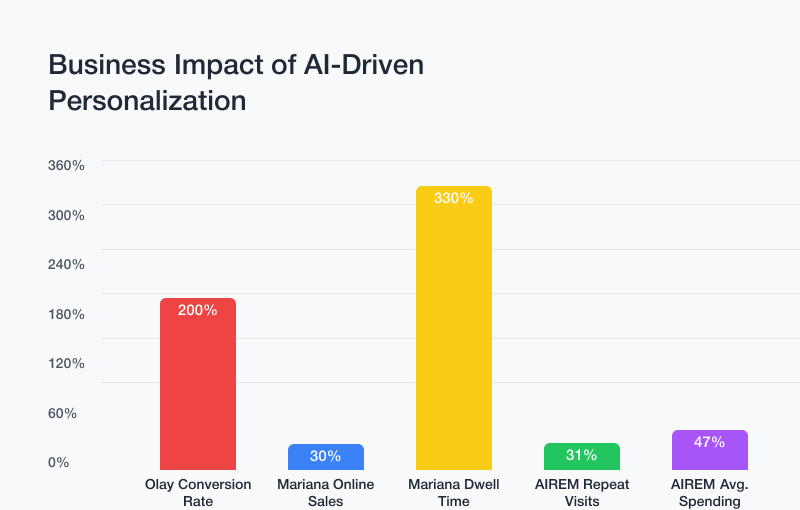
Alright, let's discuss the bottom line. Beyond buzzwords and holistic narratives, executives need to know if AI personalization delivers tangible ROI. The answer is unequivocally yes.
AI-driven personalization profoundly impacts key business metrics: conversion rates, average order value, and customer retention all see significant uplift. This isn't mere speculation; it's backed by real data. Olay’s Skin Advisor, after integrating AI, saw its conversion rates jump by 200%. A staggering increase! Mariana Naturals experienced a 30% bump in online sales and a remarkable 330% increase in dwell time. When customers receive solutions tailored to their precise needs, not just generic offerings, they engage, they stay, and they buy. It's that simple.
Customers are exhausted by trial-and-error and demand tailored solutions. When you provide that engaging, personalized experience, they respond with loyalty and increased spending. AIREM, a medical aesthetics clinic, reported a 31% rise in repeat visits and a 47% increase in average client spending. Think about that: more revenue from existing customers. This represents the holy grail of customer engagement, and this technology makes it happen.
But here’s the undeniable reality: without a robust AI personalization tech stack, businesses are ceding significant market share. Even major brands, despite their visibility – consider Rhode Skincare, for instance – can encounter a major bottleneck if they're reliant on outdated methodologies. This is untapped revenue potential that's currently being overlooked, slipping through fingers. This isn't an optional enhancement. The global skincare market, significantly fueled by AI, is projected to hit $15.75 billion by 2031. Securing a share of this burgeoning market necessitates embracing this technology.
You need to use this tech. Or watch your competitors eat your lunch.
Limitations and Ethical Considerations: A Balanced View
No technology is without its caveats, and AI in skincare is no exception. Anyone who tells you otherwise is presenting an incomplete picture. Thus, we must address its inherent limitations and ethical responsibilities, because they absolutely exist.
First up is data privacy, a paramount concern. These systems require highly sensitive biometric data and personal skin profiles. Companies must adhere to strict privacy laws, such as GDPR. If they're not rigorous about security and compliance, a catastrophic breach is a mess waiting to happen. Trust, once eroded, is incredibly difficult to rebuild.
Then there's the critical issue of algorithmic bias. These models learn from the data they are trained on. If they are predominantly trained on lighter skin tones (which historically has often been the case), they may deliver less accurate or even suboptimal recommendations for individuals with darker skin. This is a tangible challenge, not a theoretical abstraction. Users must be vigilant and demand robust, inclusive datasets.
Crucially, while AI tools are incredibly powerful and valuable supplementary tools, they are not a substitute for professional medical dermatology. Especially for diagnosis or treatment of serious skin conditions. It's essential to understand that while AI enhances understanding, professional medical advice remains indispensable.
Approach with informed skepticism. Understand the source of the advice, because like the old myth about UV causing 80-90% of aging (it's significantly less), unsubstantiated claims can proliferate rapidly. You need to discern reliable insights from hype.
AI helps, it pushes things forward, but it's just one piece of your whole skin health strategy. Don't forget that.
Alright, we've walked through the realm of data-driven skincare. Beyond the surface-level gloss and industry buzzwords, what sticks? The enduring truth: this is not merely a passing trend. It's a fundamental paradigm shift, moving us past the era of applying products blindly, based on hope. And frankly, it's long overdue.
Here are the key takeaways, distilled:
- We're finally swapping guesswork for hard numbers. AI isn't magic; it's a diagnostic tool that shows you what’s actually happening with your skin, not just what some influencer thinks might work.
- Personalized routines aren't just a marketing ploy. They work because they're built on your unique data – your specific concerns, your particular skin signature. Generic advice is now obsolete.
- Tracking progress? This is where efficacy is truly demonstrated. For users, it's tangible improvement. For businesses, it’s a clear ROI. However, vigilance regarding data privacy and algorithmic biases remains crucial.
The data-driven revolution in skincare is here to stay. While challenges exist, it delivers undeniable results, not just aspirational promises.
So, here’s my take: It's time to cease the guessing games with your skin. Go find a platform that delivers real insights, one that actually shows you the proof, not just sells you an illusion. Seek platforms like Cosmi.skin offering detailed reports and verifiable progress tracking. The tools are available; the choice to embrace them is yours.